How to Start an Auto Detailing Business from Scratch in 2026
A practical guide from business model to first paying customer - with real 2026 numbers, no fluff. Built for solo founders and 1-3 person shops.
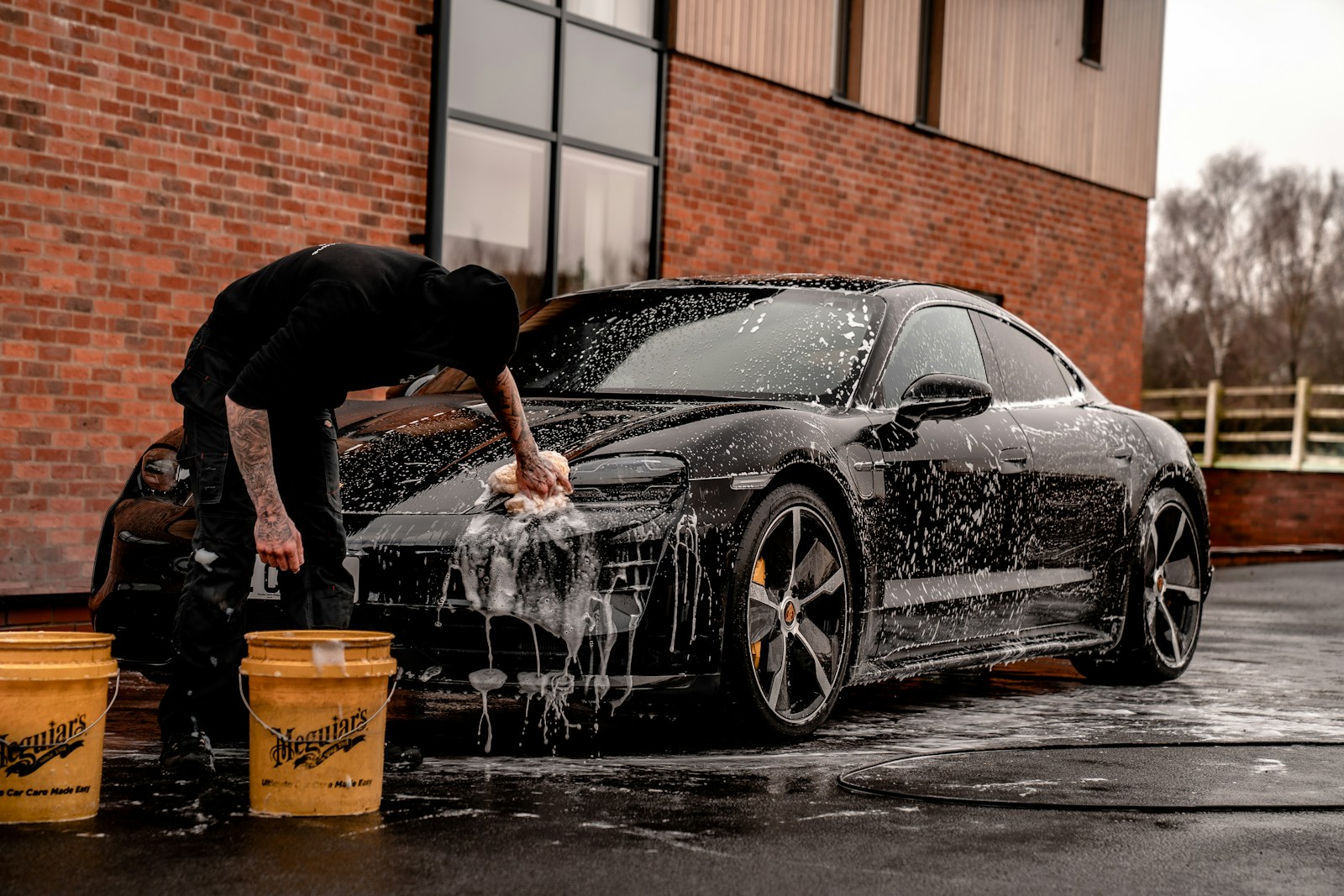
Auto detailing has the lowest barrier to entry of any service trade - you can be operational with under $1,500 in supplies and a borrowed driveway. That's also exactly why it's the most competitive. The detailers who make real money in 2026 aren't the cheapest in town - they're the ones who priced honestly, set up properly, and didn't burn out in year one.
This guide walks through every decision you need to make in order, with real US market numbers from 2025-2026. Skip the sections you've already done, but follow them in order if you're starting cold.
1. Why detailing is a strong business to start
The US car wash and auto detailing industry is roughly $18.7B in 2025, with 5-year growth projections in the 1.5-3% annual range. That's not a hyper-growth market, but it's stable and recession-resistant - people keep cars longer in soft economies and want them maintained.
What makes detailing different from other trades:
- Margins are strong. Solo mobile operators report 60-80% gross margins. A $200 full detail typically costs $8-$18 in supplies - under 10% of the ticket.
- Startup cost is low. A bare-minimum mobile rig runs $500-$1,500. Compare that to HVAC ($30k+ in tools and a service van) or landscaping ($15k+ in equipment).
- No employees required to start. You can run profitably as a single operator - many detailers stay solo by choice.
- Customer base is wherever cars are. Almost every household in the US is a candidate. ICP is broad.
The realistic income picture: typical year-one revenue for a full-time solo mobile detailer is under $50K. Mature operators (year 3+) doing 3 jobs per day at a $150 average ticket land in the $90K-$120K range. Top operators with retail packages and ceramic coatings clear $150K+ solo. Source: Jobber, UpFlip industry reports.
2. Pick your model: mobile, shop, or hybrid
Three setups, each with distinct economics:
| Mobile (you go to them) | Lowest startup cost. No rent. Slower per-day throughput (drive time eats hours). You need a reliable vehicle, water tank, and generator if customers don't have power available. Most new detailers start here. |
| Fixed shop | Higher throughput, higher startup cost ($3k-$8k/mo rent in most markets). Better for paint correction and ceramic coating where controlled environment matters. Customers come to you - your service area is bigger because driving doesn't bottleneck you. |
| Hybrid (mobile + bay) | Mobile for maintenance work, shop bay for premium services. Best long-term economics but requires both vehicle setup AND a lease. Most detailers grow into this in year 2-3. |
The biggest reason detailers fail in year one isn't bad work - it's lease overhead they can't cover during slow weeks. Mobile lets you scale demand before scaling fixed costs.
3. Legal setup (one weekend, ~$200-$500 depending on state)
Form an LLC
Sole proprietorship is technically free but offers zero personal liability protection - if a customer's car gets damaged or someone gets hurt on your property, your house and savings are on the table. An LLC fixes this for under $500 in most states.
| Kentucky (cheapest) | $40 filing fee |
| Wyoming | $100 filing + $60/year annual report |
| Texas | $300 filing fee |
| California | $70 filing + $800/year franchise tax (mandatory regardless of income) |
| New York | $200 filing + $300-$1,500 publication requirement (must publish in 2 newspapers for 6 weeks) |
File directly with your state's Secretary of State website - don't pay LegalZoom, Incfile, or similar services $300+ to do paperwork that takes 30 minutes. The filing fee is the same either way; the markup is for hand-holding you don't need.
Get an EIN (free)
An Employer Identification Number is required to open a business bank account, hire help, or contract with most commercial customers. Apply directly at IRS.gov - it's instant and free. Don't pay third-party sites that charge $50-$300 for this; they're literally just submitting the same free form.
Local business license
Most cities require a general business license - $50-$400/year for small operators. Check your city's business licensing page. Mobile operators may need to register in every city you operate in if you cross municipal lines regularly.
4. Equipment + supplies - three starter tiers
What you actually need depends on what services you're offering. Three honest tiers:
Tier 1 - bare-minimum mobile ($500-$1,500)
Enough to do interiors and basic exterior maintenance washes. Will NOT do paint correction or ceramic coating well.
- Electric pressure washer ($120-$150) - Greenworks 1700 PSI is the entry standard
- Wet/dry vacuum or extractor ($60-$200) - Shop-Vac for entry, Bissell SpotClean for upgrade
- Two 5-gallon buckets with grit guards ($30)
- Foam cannon for the pressure washer ($40-$80)
- 12-25 microfiber towels in 2-3 weights ($60-$120) - The Rag Company is the standard
- Wash mitt + drying towels ($40)
- Basic chemicals: pH-neutral car shampoo, all-purpose cleaner, glass cleaner, tire shine, interior protectant ($150-$250)
- Brushes - wheel brush, detailing brushes, upholstery brush ($50)
Tier 2 - mid-tier mobile ($2,500-$5,000)
Enables one-step paint polishing, ozone treatments, and faster turnaround. This is where most detailers settle after their first 6 months.
- Everything in Tier 1, plus:
- Dual-action polisher - Griot's Garage 6-inch ($170) or Harbor Freight Bauer ($150)
- Polishing pad set with foam + microfiber options ($100)
- Compound + polish lineup - Meguiar's Ultimate Compound, Sonax Perfect Finish ($80)
- Real water-fed extractor - Mytee Lite II ($300-$500) replaces shop-vac for interior shampoo
- Full chemical lineup: iron remover, tar remover, panel wipe/IPA, ceramic prep ($150-$250)
- 50+ microfiber towels in graded categories: glass, drying, polishing residue removal, interiors ($200)
- 100ft commercial-grade extension cord + dedicated GFCI ($60)
Tier 3 - pro setup ($8,000-$15,000+)
Capable of full paint correction and ceramic coating installations. Most detailers don't need this in year one - invest as you book the work.
- Rupes LHR21 Mark III ($450-$550) or Flex 3401 forced-rotation ($467) - the industry-standard polishers
- Full Rupes/Flex polishing pad lineup ($400-$600)
- Tornador air gun + compressor for interior detailing ($200-$400 + compressor)
- Ceramic coating kits - Gtechniq, FeynLab, CarPro CQuartz ($100-$300 per kit)
- Paint thickness gauge ($150-$300) - required for safe paint correction; you can't tell what you're working with by eye
- Generator + water tank if you're going fully off-grid mobile ($1,500-$3,500)
- 200-300 microfiber towels organized by use case
- Dedicated polishing booth or shop bay (if shop or hybrid model)
Auto Geek (autogeekonline.net), Detail King (detailking.com), Chemical Guys (chemicalguys.com), The Rag Company (theragcompany.com), Detailers Domain (detailersdomain.com), Car Supplies Warehouse (carsupplieswarehouse.com), and Kleen-Rite (kleen-ritecorp.com) are the seven retailers most professional detailers actually buy from. Avoid no-name Amazon brands for chemicals - quality varies wildly and a bad product on a customer's car is your problem.
5. Pricing your services
Real 2025-2026 US market prices, sourced from Jobber, Housecall Pro, J.D. Power, and HomeGuide industry data:
Typical detailing service pricing (2025-2026)
| Service | Low | Typical | Premium |
|---|---|---|---|
| Express wash + vacuum | $50 | $75-$100 | $125+ |
| Full interior + exterior detail | $150 | $200-$300 | $400-$500 |
| Premium full detail (decon, engine bay) | $300 | $400-$600 | $800+ |
| One-step paint correction | $300 | $400-$700 | $700+ |
| Two-step paint correction | $600 | $800-$1,000 | $1,200+ |
| Ceramic coating (with prep) | $500-$800 | $1,000-$2,000 | $2,000-$3,500 |
| Headlight restoration (pair) | $75 | $100-$150 | $200+ |
| Pet hair removal (add-on) | $20 | $30-$50 | $75+ |
Hourly benchmark for 2026: $70-$110/hour for solo detailers. Mobile premium: 10-20% over equivalent shop pricing because customers value the convenience.
Vomit, blood, feces, and other biohazard cleanups require bloodborne pathogen training and specialized waste disposal. Most general detailers explicitly refuse this work and refer it to specialty cleanup companies that charge $1,500-$5,000 per incident. If you're not certified, refusing is the right call.
The most common mistake new detailers make is undercutting local pricing 25%+ to "build a customer base." The math never works: cheap customers are demanding, slow to refer, and quick to leave when the next discount appears. Price competitively but profitably from day one.
Pricing changes every job? Plyrium handles variable quotes.
Most detailers lose money on fixed menu pricing because every car is different - neglected, oversized, or pet-loaded vehicles eat hours. Plyrium's quote builder lets you do an inspection-based estimate in 60 seconds and send it to the customer's phone. They sign + pay deposit before you even arrive.
See Plyrium's quote builder6. Finding your first customers
The customer-acquisition channels that actually work for new detailers, ranked by ROI per hour:
- Friends, family, and their networks. Free, immediate, and the highest-quality first-pass. Offer a discount for the first 5-10 customers in exchange for a Google review and one referral each.
- Google Business Profile. Set this up day one. It's free, shows your business in local search and Maps, and accumulates reviews that compound. Your single most important free marketing channel.
- Instagram + before/after photos. Detailing is the most visual trade - water-spot before vs. ceramic-coat after sells itself. Post 3-5 times per week, geo-tag every post, use city-specific hashtags.
- Local Facebook groups + Nextdoor. Where homeowners actually ask "who do you use for detailing?". Don't spam - offer thoughtful answers when relevant and your name comes up organically.
- Door hangers in target neighborhoods. Higher-income suburbs with well-kept landscaping. Spend a Saturday hanging 200; expect 1-2 calls. Cheap and physically tangible.
- Used-car dealer partnerships. Lots need cars detailed before sale. Work out a per-car flat rate. Doesn't pay luxury rates but smooths cash flow during slow weeks.
What doesn't work as well: paid Facebook/Google ads (CPCs are high in detailing), Yelp (saturated, expensive), and Groupon-style deal sites (attracts the worst-quality customers). Skip those for the first year.
7. Booking + scheduling - the operations layer
The biggest mistake detailers make in their first 6 months is running operations on a paper notebook and a personal cell phone. It works at 5-10 customers/month and falls apart at 30+. Common failure patterns:
- Double-bookings because two customers booked the same time slot from different channels
- No-shows because reminders weren't sent or got lost in personal messages
- Missed follow-ups because there's no system tracking who needs a re-detail in 60 days
- Customer complaints because they paid in cash and there's no receipt or service record
At minimum you need: a calendar that customers can book directly into, automated SMS reminders 24h before service, a payment processor (Stripe, Square), and customer records that survive your phone dying.
8. Build recurring revenue with memberships
Recurring monthly memberships are the single largest unlock for solo detailers. They smooth cash flow, build customer loyalty, and let you predict revenue 30-60 days out instead of starting every month from zero.
| Basic ($50-$140/month) | Monthly maintenance wash + vacuum, exterior decontamination. Good for daily-driver customers. |
| Standard ($199-$299/month) | Bi-monthly full detail, basic maintenance washes between. Most-popular tier - fits most household budgets. |
| Premium ($349-$499/month) | Monthly full detail, ceramic coating maintenance, priority booking, multi-vehicle discount. Highest-margin tier. |
The math that makes memberships work: 20 active $199 members = $3,980/month in recurring revenue with predictable workload. Multi-vehicle subscriptions retain ~27% better than single-vehicle (Monetizely industry data) - when you sign up a customer, ask if their spouse's car or weekend toy should be added too.
Recurring memberships are tedious to invoice manually.
Plyrium has recurring service contracts built in - set the cadence (monthly, biweekly, quarterly), pick a collection mode (autopay through Stripe, auto-invoice each cycle, or manual collect), and the system handles billing, reminders, and visit scheduling automatically. Customer pays from their phone, money lands in your bank.
See recurring contracts in Plyrium9. Insurance - what you actually need
Two policies cover ~95% of risk for a solo detailer:
General liability ($1M coverage, $360-$1,000/year)
Covers third-party bodily injury and property damage - slip-and-falls, accidental damage to non-vehicle property, etc. Average premium is around $646/year ($54/month) for solo detailers per TechInsurance and Insureon data. Many commercial venues require proof of $1M coverage before they'll let you operate on their property.
Garage keepers insurance ($456-$1,300/year)
This is the one detailers most often skip and most often regret. General liability does NOT cover damage to a customer's vehicle while it's in your care, custody, or control. Garage keepers does. If a customer's car gets stolen from your driveway or you accidentally swirl-mark a $90k car during paint correction, this is the policy that pays out.
NEXT Insurance, Hiscox, biBerk, Progressive Commercial, Insureon, and Thimble all currently offer detailer-specific coverage with online quotes. Get 3 quotes; premiums vary 30-50% between carriers for identical coverage.
If you hire even one part-time employee, you'll also need workers' compensation in nearly every US state. Solo operators usually don't need it but check your state's threshold.
10. The five most common pitfalls (from real detailers)
From AutoGeek forum threads, established detailer YouTube channels, and Reddit r/AutoDetailing - the failure patterns that show up most consistently:
- Underpricing to compete on price. Pricing 25%+ under local average to "build customers fast." Cheap customers are the most demanding, slowest to refer, and first to churn. Price competitively but profitably.
- Fixed menu pricing. Saying yes to a $200 full detail on a neglected pickup with caked mud, pet hair, and 3 years of dust eats 6 hours. Switch to inspection-based pricing where you quote AFTER seeing the vehicle. Mobile Tech RX reports 40% revenue increase from same workload after switching.
- Underestimating job time. Beginners promise 3-hour full details, deliver 6+, burn out. Always quote longer than you think - overdelivering on time is fine; overdelivering on hours kills your hourly rate.
- Wrong wash technique on real customer cars. Washing in direct sun, using a single bucket without grit guards, using the wrong mitt grade - these damage paint and create swirl marks that customers see and never come back. Practice on your own cars first.
- Ignoring customer service. Late arrivals, missed callbacks, ignoring requests. Detailing is sold as luxury - customers expect concierge-level service. Show up on time, communicate proactively, follow up after every job.
11. Your first 30 days - concrete plan
If you're starting today, here's the order of operations:
30-day startup plan
| Week | Focus | Outcome |
|---|---|---|
| Week 1 | Legal + insurance | LLC filed, EIN obtained, business bank account open, GL + garage keepers policies bound. ~$700-$1,500 spent. |
| Week 2 | Equipment + practice | Tier-1 starter kit purchased ($500-$1,500). Practice on your own and family's cars until you can do a full detail in 3 hours flat. |
| Week 3 | First five customers (discounted) | Friends and family at 30% off in exchange for honest reviews and one referral each. Get real photos for your Instagram. Refine your process. |
| Week 4 | Public launch | Google Business Profile live with 5+ reviews. First 3 social posts. First door-hanger run in target neighborhood. First paid public customer. |
Realistic expectation: 4-12 months to consistent full-time income. Year 1 is the hardest. The detailers who make it past month 6 mostly make it for the long haul - the ones who quit do so in the first 90 days, almost always because of cash flow, not skill.
Detailing rewards consistency and quality more than scale or aggression. Take care of every car like it's the customer's only car. Show up on time. Charge fairly. The work compounds.
Run your auto detailing business with Plyrium
CRM, scheduling, quotes, invoices, recurring service contracts, and an AI receptionist - built for service-trade contractors. 14-day free trial. No setup fee. No long-term contract.
Start free trial