How to Start an HVAC Business from Scratch in 2026
A practical guide from EPA Section 608 to your first paying install - with real 2026 numbers, no fluff. Built for solo operators and small-crew shops.
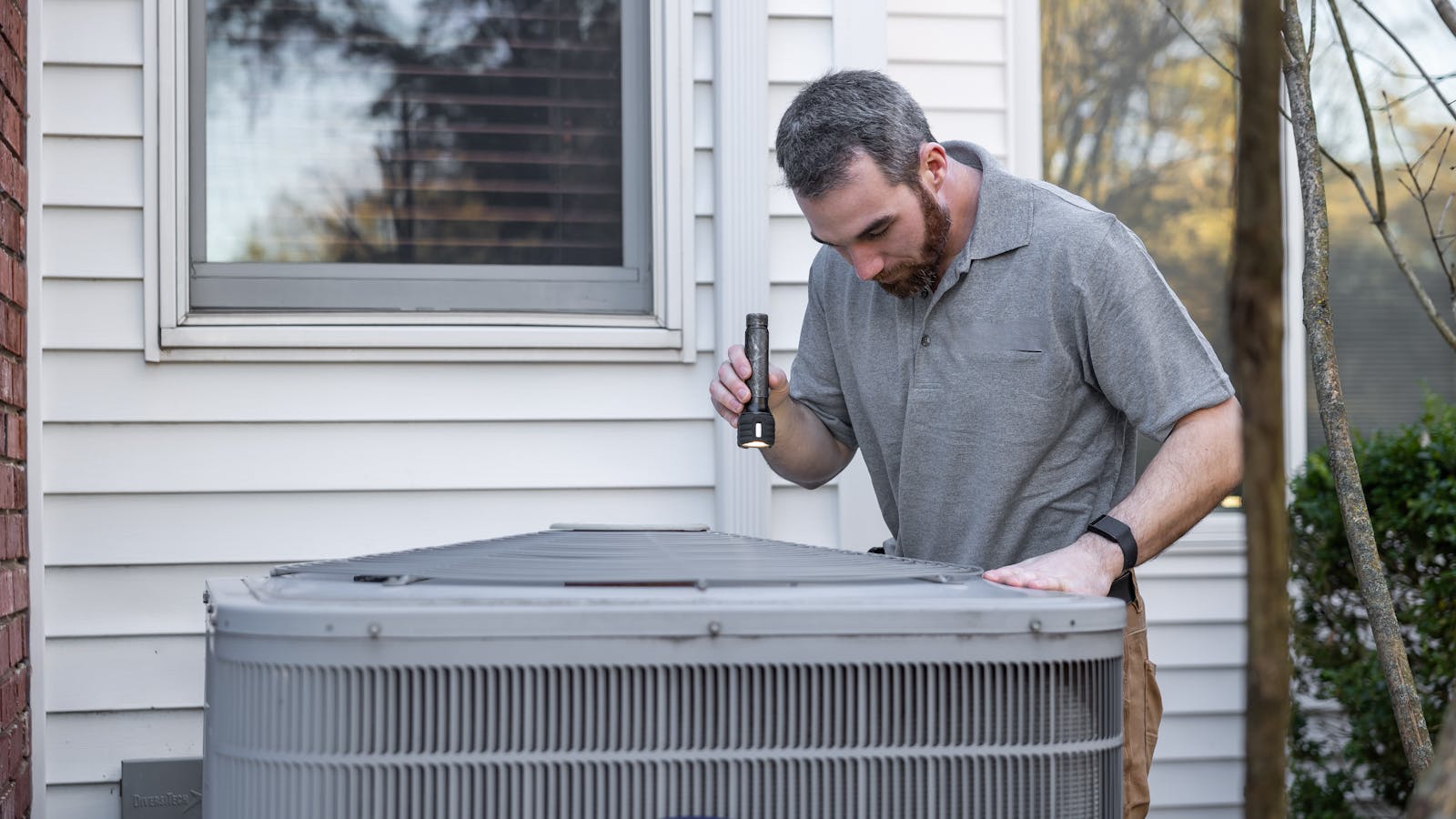
HVAC is the highest-revenue trade in the residential service economy. A single full system replacement averages $11,590-$14,100 in 2026 (Modernize industry data) - more than 50 standard cleanings or 70 detail jobs combined. The trade-off: it's also the most regulated, most capital-intensive, and most refrigerant-rule-heavy of any service trade you can start in 2026.
This guide walks every decision in order, with verified 2026 US market numbers. Skip the sections you've already done; follow them sequentially if you're starting cold.
1. Why HVAC is a strong business to start
Bureau of Labor Statistics 2024 data puts HVACR mechanics + installers at 425,200 jobs nationally with a median wage of $59,810/yr - but that's the technician number, not what shop owners earn. BLS projects 8% growth from 2024-2034 with ~40,100 openings per year, driven by housing turnover and the ongoing R-410A → A2L refrigerant transition.
What makes HVAC different from other trades:
- Tickets are large. Average full system replacement = $11,590-$14,100 (Modernize). Even repair tickets cluster $200-$900 vs $80-$200 for plumbing service work.
- Recurring maintenance is high-margin. Maintenance visits run 40-60% gross margin (Result Calls / Oxmaint industry data); contractors with active maintenance plans see 20-40% higher annual revenue per customer.
- Financing closes deals. 65% of HVAC projects over $5,000 are financed (GreenSky industry data); 87% of contractors offering monthly payments win jobs because of that option (Wisetack 2025). Average Synchrony-financed HVACR job: $8,536.
- Demand is weather-driven, not economy-driven. Even in soft economies, AC dies in July and furnace fails in January. Service work is recession-resilient.
The realistic income picture: a full-time solo HVAC tech doing service work + small replacements typically clears $90K-$140K in year-two revenue. Operators who add maintenance plans + financing + occasional full-system installs land in $200K-$400K solo. The ceiling on a 2-3 truck shop in a healthy metro is $750K-$1.5M. Sources: Housecall Pro 2026 pricing guide, FieldEdge state guide.
2. EPA Section 608 - start here, before you do anything else
Federal law requires anyone who handles refrigerant to hold an EPA Section 608 certification. No state license substitutes for it; no exception for small jobs. Get this BEFORE you spend a dollar on tools or trucks - it's the gating credential.
| Type I | Small appliances <5 lb refrigerant. Window units, mini-split heads. Test can be open-book. |
| Type II | High-pressure systems - most residential AC + heat pumps. Closed-book, proctored. |
| Type III | Low-pressure chillers (commercial, rare in residential). Closed-book, proctored. |
| Universal | All three types. The certification you actually want for residential service. |
Cost: $20-$150 depending on provider. SkillCat's online program runs ~$10; brick-and-mortar testing $80-$150 (Trade Colleges, SkillCat). Pass threshold is 70%. Certification is lifetime valid - no renewal.
The EPA Lead Renovation, Repair, and Painting rule requires certification for any contractor disturbing >6 sq ft of interior or >20 sq ft of exterior painted surface in homes built before 1978 - which is most furnace + ductwork retrofits. 8-hour course, 5-year validity, fines up to $44,792 PER DAY per violation under TSCA. Get RRP-certified the same week as 608.
3. State licensing + apprenticeship - what you actually need
After EPA 608, requirements vary dramatically by state. Per NEXT Insurance and FieldPulse 2025, nine states have NO statewide HVAC license: Wyoming, Vermont, Illinois, Arizona, New York, Colorado, Kansas, Missouri, Indiana. Counties and cities in those states almost always do, so verify locally before bidding.
Where state licensing exists, the typical structure is Apprentice → Journeyman → Master / Contractor. Master is generally required to pull permits and qualify a contracting business.
| Colorado (no state HVAC license, journey-level voluntary) | 8,000 hours / 4-year apprenticeship + 576 classroom hours, OR 16,000 hours equivalent experience |
| Maryland | Apprentice 4+ years, 6,000 hours under licensed contractor for journeyman; Master = 3 years as journeyman + 1,875 hours in prior year + 70% on master exam |
| Connecticut | Minimum 3,000 hours (18 months) under licensed contractor |
| New Jersey (master pathway) | Bachelor's HVAC/R + 1 yr exp; OR bachelor's related field + 3 yr; OR vocational program + 2 yr; OR 4-year apprenticeship + 1 yr |
NATE certification is optional but worth it. Per industry surveys cited by Lincoln Tech, 79% of contractors prefer NATE-certified hires; 92% of homeowners prefer NATE-certified contractors. Exam cost: $50-$300 per NATE. Renewal every 2 years with 16 CEH continuing-education hours.
4. Equipment + truck setup - three starter tiers
What you actually need depends on what services you're offering. Three honest tiers (composite from Housecall Pro, Wexford Insurance, Paysley):
Tier 1 - solo bootstrap ($5,700-$11,000 not including truck)
Service work on a borrowed/used truck. Won't do new full-system installs - those need a real refrigerant inventory + sheet metal capacity.
- Used cargo van or service truck ($5,000-$15,000)
- Yellow Jacket or Fieldpiece refrigerant gauge set ($300-$600)
- Refrigerant recovery machine ($500-$1,000) - required for compliant service work
- Vacuum pump 6-8 CFM ($200-$400)
- Micron gauge ($150-$300)
- Electronic leak detector ($150-$400)
- Fluke or Klein multimeter ($150-$300)
- Hand tools, ladder, drill set, basic sheet metal tools ($1,000-$2,000)
- Refrigerant tanks (small cylinders of R-410A reclaimed + R-32 + R-454B for new systems) - $300-$800
- Safety gear ($200-$800) - gloves, glasses, A2L-rated equipment for newer refrigerants
Tier 2 - equipped solo ($25,000-$50,000)
Service plus full-system replacements. This is where most operators settle by year 2.
- Everything in Tier 1, plus:
- Newer service truck or cargo van ($25,000-$40,000 - Ford Transit, Sprinter, ProMaster)
- Ranger Design or Adrian Steel HVAC shelving package (~$4,000 per American Ladders)
- Combustion analyzer for furnace work - Yellow Jacket CA502P ~$1,124 (Test Equipment Depot) or Fieldpiece CAT85 (dealer-quoted, similar tier)
- Full sheet metal kit - shears, brakes, hand seamers ($800-$1,500)
- Truck inventory: stocked capacitors, contactors, common motors, drain pans, refrigerant ($5,000-$10,000)
- Recovery + dual-stage vacuum pumps for production work ($800-$1,500)
Tier 3 - multi-truck shop ($150,000+)
Two service trucks + a small office + parts warehouse. Don't buy this in year one - invest as you book the work. The full plumbing/HVAC startup financial model from Financial Models Lab puts a multi-truck operation at ~$215K CAPEX with $673K cash needed for working capital.
5. Pricing your services
Real 2026 US market prices, sourced from Housecall Pro, FieldEdge, HomeGuide, Angi, and Modernize:
Typical HVAC service + install pricing (2026, US national)
| Service | Low | Typical | Premium |
|---|---|---|---|
| Service call / dispatch fee | $69 | $89-$149 | $200+ |
| Hourly labor (customer-billed) | $70 | $85-$150 | $200 |
| After-hours / weekend / holiday | 1.5× | 2× standard | — |
| Capacitor replacement (parts + labor) | $150 | $250-$400 | $500 |
| Contactor replacement | $95 | $150-$250 | $300 |
| Combo contactor + capacitor | $250 | $300-$500 | — |
| Blower motor replacement | $300 | $560 avg | $1,150 |
| Refrigerant recharge - R-410A | $50/lb | $70/lb | $90/lb |
| Refrigerant recharge - R-32 / R-454B | $200/lb | $275/lb | $400/lb |
| AC replacement (1,500-2,000 sq ft home) | $3,500 | $6,600 avg | $14,000+ |
| Furnace replacement | $3,800 | $7,000-$9,000 | $12,000 |
| Heat pump install | $6,000 | $12,000-$18,000 | $25,000 |
| Full system replacement | $8,000 | $11,590-$14,100 avg | $25,000+ |
| Mini-split - single zone | $2,000 | $3,500-$5,000 | $6,000 |
| Mini-split - multi-zone | $5,000 | $8,000-$15,000 | $25,000+ |
| Annual maintenance plan | $150 | $180-$275 | $500 |
Maintenance plan benchmark: average tune-up alone is $275 (Angi 2026). Service contracts $150-$500/yr, with most basic plans at $180-$250/yr (Fixr 2026). Maintenance visits run 40-60% gross margin per Result Calls - they're the most profitable hours you'll bill all year.
Per Jan 1, 2025 EPA AIM Act rules (source), R-410A manufacturing in new equipment is banned - split-system installs from Jan 1, 2026 must use A2L refrigerants (R-32 or R-454B). R-454B cylinder prices spiked >300% during the 2025 transition (TD Industries). R-32 starts around $275/lb as of mid-2025 (Oasis HVAC). Customers who haven't been told about this think you're price-gouging on "freon." Educate them up front: "This is a federal refrigerant transition; here's what it costs now vs. what your system uses."
Quote variability eats your hours? Plyrium does inspection-based estimates.
HVAC quotes vary by 200-500% within the same square footage. Plyrium's quote builder lets you walk the basement, photograph the equipment, and generate a quote in under a minute - sized correctly, with line-item refrigerant + permit costs, and an optional financing pre-qual link. Customer signs + pays deposit before you leave the property.
See Plyrium's quote builder6. Financing - the closing tool that competitors aren't using
65% of HVAC projects over $5,000 are financed (GreenSky industry data via HomePros). 87% of contractors offering monthly payments WIN jobs because of that option (Wisetack 2025 data via Pipeline On). Offering financing increases close rate by 12% AND average ticket by 13% (GreenSky data).
The mechanics: GreenSky, Synchrony, Service Finance, and GoodLeap are the four most-used providers. Customer applies on a phone-friendly form, gets a decision in seconds, and signs digitally. Money lands in your bank in 1-3 business days. Dealer fees: 0%-26.6% depending on the promo terms (Build-Folio GreenSky review). The 0% promotional offers cost YOU more in dealer fees but close more deals - you choose the right tier per customer.
Customer hesitating on a $9,000 quote will almost always say yes to "$149/month for 84 months at 9.99%" instead. Calculate the monthly payment in your quote builder. The closer-and-more-profitable model is selling the monthly amount, not the total.
7. Finding your first customers
Customer-acquisition channels that work for new HVAC operators, ranked by ROI per hour:
- Friends, family, and their networks. Free, immediate, highest-quality first-pass. Offer a discount to your first 5-10 customers in exchange for a Google review and one referral each. Old AC units are a goldmine here - every neighbor knows someone whose system is on its last legs.
- Google Local Services Ads (LSA). Average cost per lead for HVAC: ~$80, broader range $20-$85 (Search Light Digital, The Media Captain). Requires Google business verification + license + insurance + background checks for owners and field staff (Google Guaranteed badge). Typical weekly budgets: $200-$1,500.
- Google Business Profile + reviews. Set up day one. Reviews drive LSA ranking. Higher-ranked LSA = more leads at the same CPL.
- Wholesaler partnerships - Carrier, Trane, Lennox dealer programs. Trane Comfort Specialist requires 90%+ customer-satisfaction survey rating + ongoing NATE certification + annual sales volume. The badge is real - Trane sponsors NATE testing for up to 2 techs/yr per dealer. Lennox Premier and Carrier FAD have similar tiered programs.
- Door hangers in target neighborhoods. Industry response rate 1-3% normal, 3% strong, 5%+ elite (ThinkFlyers 2025). Target homes built 1995-2010 - those systems are hitting 20-30 years old and breaking now.
- Maintenance-plan referral pipeline. Once you have 50+ active maintenance customers, they refer at much higher rates than one-time service customers. The maintenance plan itself is your lowest-CAC channel.
8. Build recurring revenue with maintenance plans
Maintenance plans are the single largest unlock for HVAC operators. They smooth cash flow (especially through fall + spring shoulder seasons), let you predict revenue, and convert one-time customers into multi-year repeat business. Industry benchmark: contractors with active maintenance plans see 20-40% HIGHER annual revenue per customer (Result Calls).
| Basic ($150-$200/yr) | 1 spring AC tune-up + 1 fall furnace inspection. 10% off repairs. Priority booking. |
| Standard ($199-$299/yr - most popular) | Same 2 tune-ups + 15% off repairs + waived diagnostic + filter delivery + after-hours premium reduced 50%. |
| Premium ($349-$500/yr) | Quarterly visits + 20% off repairs + waived diagnostic + free filters + lifetime parts warranty + priority booking + first-call-out for emergencies. |
The math: 100 active Standard members at $250/yr = $25,000/yr in recurring revenue + 200 maintenance visits per year (most-profitable hours you bill, 40-60% gross margin) + 100 customers who CALL YOU FIRST when their compressor dies. The repair + replacement work the plan generates is typically 3-4× the plan revenue itself.
Maintenance plan billing is a leak - Plyrium plugs it.
Recurring service contracts in Plyrium handle the boring side of maintenance plans: autopay through Stripe, auto-scheduled visit reminders, customer cards on file with self-service updates. When a card fails, Plyrium emails the customer directly with a payment link - you don't chase. Customer cancellations + price changes are one-click.
See recurring contracts in Plyrium9. Insurance - what you actually need
Four coverage types every HVAC contractor should carry. Costs from Insureon 2026 and Kickstand Insurance:
| General liability ($1M/$2M) | $78/mo or $941/yr avg (Insureon). Range $300-$10,000/yr depending on size. |
| Commercial auto | $191/mo or $2,292/yr avg (Insureon). |
| Workers comp | $223/mo or $2,672/yr avg. 2025 rate: $3.14 per $100 of payroll (Kickstand). |
| Business Owner's Policy (BOP) | $124/mo or $1,493/yr avg - bundles GL + commercial property. |
| Total annual stack (small/medium op) | $3,000-$12,000/yr depending on payroll + revenue + state. |
| Surety bond (where required) | $3,000-$25,000 face value. Premium 1-3% of bond face for good credit. MN $25K bond ≈ $250/yr; DC $5K bond ≈ $175/yr. |
Bond requirements vary by state. New Jersey $3,000; Florida Division I $20K, Division II $10K; DC $5,000; Minnesota $25,000 (Bryant Surety). Some states require bonds for permit-pulling specifically; others for the contractor license itself.
Workers comp is required from the first W-2 employee in nearly every state. The penalty for not carrying it when you should: stop-work orders, 6-figure fines, and personal liability for medical bills if anyone gets hurt. The IRS + state DOL announced renewed enforcement on 1099-vs-W2 misclassification in 2024-2025. Cheaper to classify correctly + carry the policy.
10. Regulatory gotchas + the R-410A → A2L transition
The 2025-2026 refrigerant transition is the biggest compliance event in HVAC since R-22 phaseout. The timeline (source):
- Jan 1, 2025: New AC/HP equipment manufactured with >700 GWP refrigerant (R-410A) BANNED under EPA AIM Act.
- Through Dec 31, 2025: Existing R-410A inventory at distributors can still be installed.
- Jan 1, 2026 onward: Split-system installs MUST use A2L refrigerants (R-32 or R-454B).
- Jan 1, 2028: Package units transition to A2L.
- R-410A service work: allowed indefinitely using reclaimed refrigerant after new supply ends.
A2L safety: R-32 and R-454B are mildly flammable (A2L class). New code requires systems with >4 lb refrigerant charge to have a Refrigerant Detection System (RDS), spark-proof wiring, and specialized handling per ICC update. Train + equip BEFORE you bid your first A2L install.
Per 40 CFR Part 82, technicians must carry proof of EPA 608 certification at the place of business. For appliances ≥50 lbs of refrigerant, the OWNER (not tech) retains records of leak inspections + repair-verification tests for 3 years on-site, available for EPA inspection. Federal violations of EPA 608 carry per-day penalties, and they DO audit larger residential properties + multi-family complexes.
11. Your first 30 days - concrete plan
If you have your EPA 608 + state journeyman experience and you're starting today, here's the order of operations:
30-day startup plan
| Week | Focus | Outcome |
|---|---|---|
| Week 1 | Legal + insurance + bond | LLC filed, EIN obtained, business bank account open, GL ($1M) + commercial auto + bond (if state requires) bound. EPA 608 + Lead RRP cards on hand. ~$2,500-$5,000 spent. |
| Week 2 | Truck + tools + supplier accounts | Used truck purchased + outfitted with shelving. Tier-1 tool kit acquired. Distributor accounts opened (Trane, Lennox, Carrier, Goodman regional supplier; Ferguson HVAC, Johnstone, ACWholesalers). ~$10,000-$25,000 spent. |
| Week 3 | First 5 customers (discounted) | Friends, family, and their networks at 20% off in exchange for honest reviews and one referral each. Refine your service-call process. Offer a maintenance plan to every one - capture them as recurring before they become one-time. |
| Week 4 | Public launch + LSA | Google Business Profile live with 5+ reviews. LSA campaign live ($300/wk to start). Financing partner (GreenSky / Synchrony) approved + integrated into quote flow. First paying public customer. |
Realistic expectation: 6-12 months to consistent full-time income for a solo HVAC operator. Year 1 cash flow is brutal during shoulder seasons (March-May, September-November) - set aside 30%+ of every summer/winter ticket to carry you through. The operators who make it past their first full year mostly make it for the long haul.
HVAC rewards mechanical skill, refrigerant compliance discipline, and clean customer communication more than scale or aggression. Show up on time. Educate the customer. Charge fairly for premium-margin work. Don't compete on price - compete on response time, cleanliness, and explaining what you actually fixed.
Run your hvac business with Plyrium
CRM, scheduling, quotes, invoices, recurring service contracts, and an AI receptionist - built for service-trade contractors. 14-day free trial. No setup fee. No long-term contract.
Start free trialRelated guides
How to Run a Service Business Without Software in 2026 (Free Templates)
Seven free Word + Excel templates plus the honest playbook for running your first 30+ customers on $0 of monthly software. Don't buy Jobber, Housecall Pro, ServiceTitan, or Plyrium until you actually need it.
HVAC Maintenance Agreements: Pricing, Margins, and What Customers Actually Want in 2026
Done right, a maintenance agreement is the most profitable thing a residential HVAC shop sells. Done wrong, it's $79/year of nothing.
Flat-Rate vs. T&M HVAC Pricing: When Each Wins (Real Numbers for 2026)
Most HVAC shops pick one model and stick with it for 20 years. The data says both can work and both can quietly bleed you out. Here's how to know which one fits your shop today.
How to Transition Your HVAC Business from Service Calls to Install/Replacement Work (2026 Guide)
Honest playbook for established HVAC service shops ready to shift the revenue mix toward high-ticket installs. Average residential install ticket $7,500-$15,400 in 2026, but service work still has higher per-dollar gross margin - the real win is the maintenance-plan tail. Plus the 2026 regulatory reset (R-410A ban, 25C tax credit gone, IECC 2024) that changes everything from prior-year guides.