How to Start a Food Truck Business from Scratch in 2026
An honest guide for someone genuinely starting one - with real 2026 numbers, no motivational fluff. Built for first-time operators who want to know what they're actually signing up for.
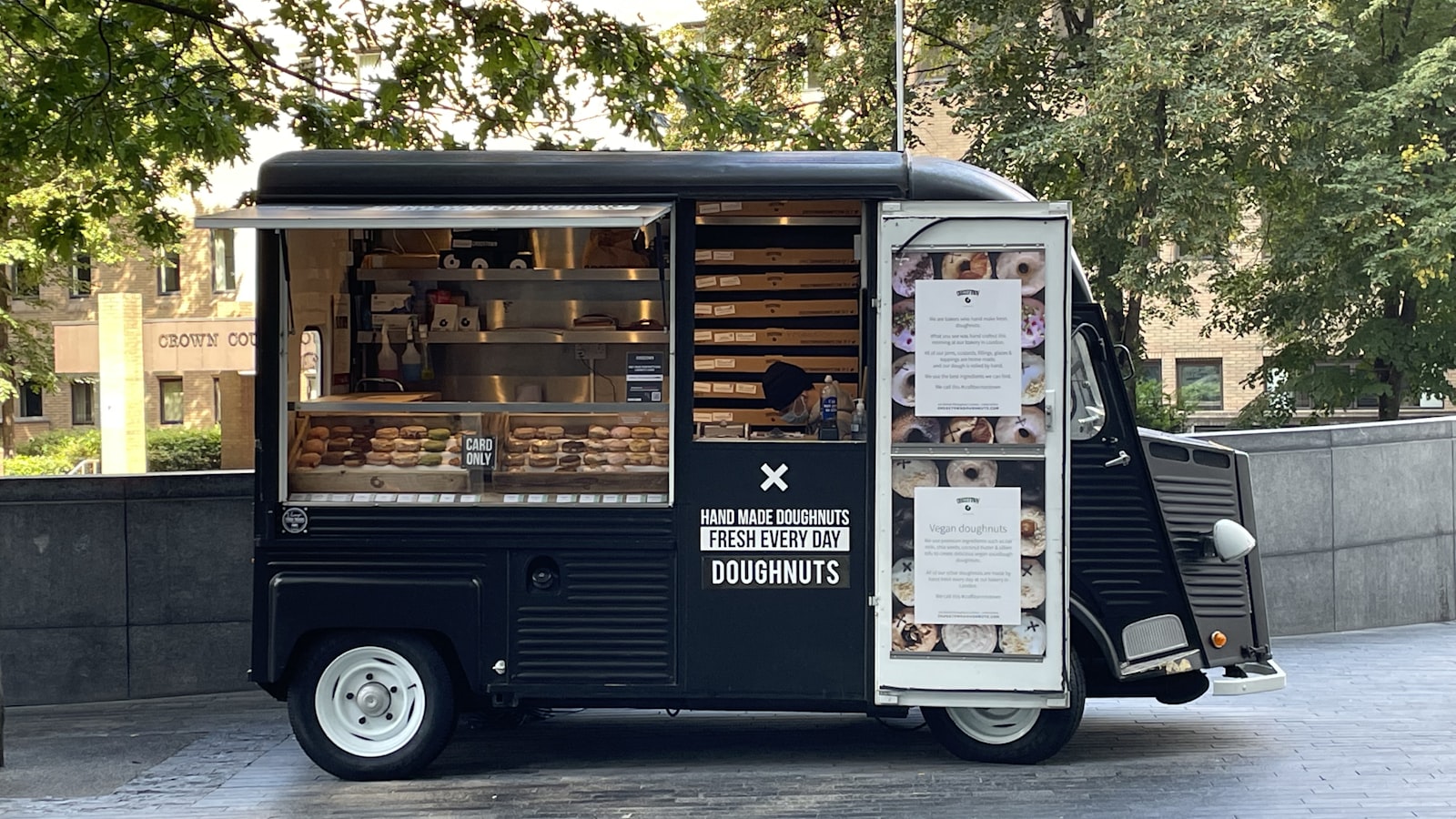
Food trucks have the highest fail rate of any small-business category in the first three years. Industry data is unreliable but the consensus from operators is brutal: most trucks don't make it past year two. The reasons are usually NOT bad food. They're cash flow (everything costs more than expected), seasonality (Northern US trucks lose 3-5 months a year), commissary surprises (you can't operate from your home kitchen - that one alone kills hundreds of plans every year), and the brutal hours.
But the trucks that DO make it work clear $250K-$500K a year per truck - and they do it because the operators went in with eyes open. This guide walks every decision in order, with verified 2026 US numbers. The goal: you finish reading and either decide "yes, I'm doing this" knowing exactly what you're signing up for, OR you decide "not for me" before spending the $85K. Both are wins.
1. The honest startup cost - $85,000 to $120,000
Anyone who tells you you can start for under $20K is selling you a dream. Per FoodTruckCost, Restroworks, and PitStop, realistic launch using a USED truck runs $85,000-$120,000 all-in. Custom-build with premium equipment can exceed $250,000.
| Used truck (already-equipped, turn-key) | $50,000-$80,000 - sweet spot for first-timers |
| Equipment upgrades + repairs to used truck | $5,000-$15,000 (assume the seller skipped something) |
| Permits + licenses (huge city variance) | $1,500-$4,000 |
| Insurance (first year) | $2,000-$10,000 |
| Initial inventory (food, packaging, paper goods) | $3,000-$5,000 |
| Working capital reserve (8-12 weeks runway) | $10,000-$20,000 |
| Branding (truck wrap, signage, basic web/social) | $3,000-$8,000 |
Alternatives that bring the number down:
- Concession trailer instead of truck: $20,000-$30,000 most popular setups; small/basic units start ~$7,600. Requires a tow vehicle. Less mobility (can't drive between events) but dramatically cheaper to enter (Toast, Concession Nation).
- Used trailer in the $10,000-$60,000 range: bigger spread than used trucks; more risk of inheriting hidden problems.
- New custom-built truck: $109,500 average, range $100,000-$350,000. Build-out time 2-6 months (typically 4-12 weeks once your slot opens at the builder). Restroworks 2026, Mile High Food Trucks.
What used to be a $50-$70K truck in 2022 is now $60-$85K per Tivasisters 2026. The cheap-used-truck era is over. Budget accordingly.
2. The commissary kitchen - the requirement nobody warns you about
This is the requirement that kills more food truck plans than any other. Almost every US health department requires food trucks to operate from a licensed commissary kitchen - NOT from a home kitchen. Without a signed commissary agreement at permit application, your application is denied.
What the commissary is for (BlueCart, The Food Corridor):
- Food storage (walk-in cooler/freezer space)
- Prep overflow that doesn't fit in your truck
- Daily fresh-water tank fill (you're filling 30+ gallons every service day)
- Daily grey-water dump (where the wash + cleanup water goes)
- Truck cleaning + sanitizing space
- Wastewater + grease disposal (proper, code-compliant)
| Hourly use (occasional) | $15-$50/hour |
| Monthly membership (basic) | $300-$1,500/month |
| Full-service (parking + storage + 24/7 access) | $1,000-$3,000/month |
If commissary capacity in your city is tight (LA, NYC, Chicago, Austin), there may be waitlists. A truck sitting in your driveway with no commissary contract is an expensive paperweight. Search The Food Corridor or FindHomegrown for shared commercial kitchens nearby. Visit 3-4 in person. Get pricing in writing. Confirm they'll provide a permit application letter.
3. Permits + licenses - the regulatory maze
Total licensing cost typically $1,500-$4,000, but city variance is brutal: Indianapolis averages $590; Boston averages $17,066; Seattle $6,211 (Pilsen Food Truck Social). Excluding outliers, average across top 20 food-truck cities is ~$1,864 (Square). NYC permits are capped/waitlisted with multi-year waits in practice (NYFTA).
| Federal EIN | Free at IRS.gov. Required for business bank account + hiring |
| Business license (city) | $50-$500 depending on city |
| Mobile food vendor permit | $200-$500 typical, ranges $50-$1,000+ depending on jurisdiction |
| Health department permit | State + local. Annual inspection is part of issuance |
| ServSafe Manager certification (CFPM) | Required by most states for the Person In Charge. ~$100-$200 exam. Some states require CFPM on-site during operating hours |
| Fire marshal inspection | Annual. $50-$300 typical. Checks gas, electrical, fire suppression |
| Sales tax / seller's permit | State-by-state. Required to collect sales tax + buy ingredients tax-free |
Food Manager Certification (ServSafe). Indiana, Kentucky, Illinois, Michigan, Wisconsin, Washington, Connecticut, and many others require at least one ServSafe Manager certified Person In Charge per establishment. Michigan requires the CFPM to actively manage at least 30 hrs/week (Apex Workplace). Get yours BEFORE applying for permits - many health departments require the certificate at application.
CDL / DOT. Standard Class D driver's license is sufficient for most food trucks. CDL only required if GVWR/GCWR ≥ 26,001 lbs (FMCSA). Most food trucks are 12,000-16,000 lbs and don't trigger CDL requirements. CDL also required if towing a trailer over 10,000 lbs.
Cottage food laws cover home-cooked low-risk goods sold direct-to-consumer at farmers markets. You cannot sell home-cooked food from a truck. Florida explicitly prohibits cottage food sale to mobile vendors (UF/IFAS); SC bans any prep inside a mobile unit (Clemson Extension); WA limits cottage products to direct sales from home/farmers markets. All time/temperature-controlled foods require a permitted commercial facility.
4. The truck + equipment - what you actually need
Total kitchen equipment cost: $10,000-$50,000 if outfitting from scratch (Eat App, PitStop). The line items:
Cooking equipment
- Flat top griddle, 36-48 inch ($500-$3,000 commercial)
- Fryer (single or dual basket) - $400-$2,500 commercial gas
- Convection oven or salamander broiler - $800-$3,500
- 6-burner range or charbroiler - $800-$2,500
- Most trucks use propane (more BTU per dollar, doesn't need 220V); some go hybrid with electric. Propane is the practical default.
Refrigeration ($1,100-$4,500 per unit)
Per Pizza Prep Table and TigerChef. Undercounter $1,200-$3,000; prep-table refrigerator $1,500-$4,000. Most trucks use undercounter or worktop refrigerators that double as prep surface. Atosa and Dukers are common budget brands.
Generator - Honda EU7000is is the most-cited choice
18-hour run time, inverter technology (clean power for POS systems). Runs on gasoline only stock - propane/natural gas use requires an aftermarket conversion kit (Genconnex) like Genconnex or US Carbs tri-fuel. Propane burns cleaner with longer shelf life but tanks are bulky and refill logistics are real. Budget $4,000-$5,500 for the EU7000is + propane conversion.
Water tanks - health-code mandated
Grey water tank must be at least 15% larger than fresh in most jurisdictions; many areas require 50% larger with a 7.5-gallon minimum. Common setup: 30-gal fresh + 35-50-gal grey (Tank Depot, Mr. Trailers). Fresh and grey hoses must be different colors/sizes to prevent cross-contamination. A minimum of 3 gallons heated to 120°F must be available within 10 seconds at a 3-compartment sink. RV tanks are legal only if NSF-certified.
Type I commercial hood + fire suppression
Any Type 1 hood requires a UL 300-listed fire suppression system (Ansul R-102 is the dominant product, also Kidde). Hood overhang must extend 6 inches minimum beyond the cooking appliance on all sides per NFPA / International Mechanical Code. Integrated hood + Ansul packages for trucks (Halifax, HoodMart) are the standard (HoodMart). Budget $4,000-$10,000 installed.
POS system
| Square for Restaurants | No monthly fee on basic plan. 2.6% + 10¢ per transaction. Cheapest for sub-$10K/mo volumes - roughly $270/mo at $10K in card sales. Most common food truck choice. |
| Toast Go | $75+/month plus $799-$1,499 hardware. Locked into Toast processing. Best for kitchen-display + inventory depth - at $10K/mo, runs $435-$540/mo. |
| Clover Mini | Middle ground. Rates as low as 2.3% + $0.10 with right bank partnership. |
Sources: Tech.co, The Truck Chef. For a first-time operator at typical food-truck volume, Square is the right default.
5. Insurance - what you need + what it costs
Plan on $2,000-$10,000 annually total ($150-$400/month is typical; full realistic range $70-$500/month). Commercial auto is usually the biggest line item, NOT general liability. Sources: LogRock, NEXT 2026, MoneyGeek.
| Commercial auto | $120-$450+/month. Driving radius, garaging ZIP, driver MVR, and truck value dominate the premium |
| General liability ($1M/$2M typical) | $30-$150/month standalone. Most events/venues require $1M per occurrence / $2M aggregate |
| Product liability (food poisoning) | Usually bundled inside general liability |
| Business Owners Policy (BOP) | $60-$250/month - bundles GL + property/equipment |
| Workers comp | Required if you have employees in most states |
| Equipment / property coverage | Often bundled in BOP. Covers fire, theft, mechanical failure of kitchen gear |
6. Unit economics - what you'll actually make
Real 2026 food truck unit economics, sourced from BusinessDojo, Food Truck Lease, Get Harvest, and Toast:
Food truck unit economics (2026)
| Metric | Struggling | Typical | Top performers |
|---|---|---|---|
| Average ticket | $8 | $10-$14 | $16.50+ |
| Customers per day | 20-50 | 50-150 | 150-200 |
| Daily gross revenue | $300-$500 | $1,000-$1,500 | $2,000-$2,500 |
| Annual revenue | Under $100K | $250K-$346K avg | $500K+ |
| Food cost % | 40%+ | 28-35% | Under 28% |
| Labor cost % (with employees) | 35%+ | 20-30% | Under 20% |
| Prime cost (food + labor) | 70%+ | 60-65% | Under 60% |
| Net profit margin (with employees) | Negative | 6-9% | 9-12% |
| Net profit margin (owner-operator) | Marginal | 7-15% | 15%+ |
Lunch (11-2) and dinner (5-8) drive 60-80% of daily sales (Food Truck Lease). The rest of the day is prep, drive-out, breakdown, and cleanup.
Food cost 30%, labor cost 30%, overhead 30% - leaves 10% for net profit. If your math doesn't fit this rough shape, dig in BEFORE launching. Sources cited above all converge on these benchmarks.
7. Where the money actually is - locations + routes
- Brewery / taproom partnerships - the single most-cited recurring revenue channel for mature food trucks. Breweries with food trucks see beer share of taproom revenue drop from 85-95% to 65-75% - meaning food fills a real gap, and breweries have direct financial incentive to keep good trucks coming back. Hot markets: Austin, Denver/Colorado, Columbus, Raleigh, Florida (Tampa/Naples/Jacksonville), Orange County. Sources: Mr. Trailers, Craft Brewing Business, BusinessDojo.
- Catering - highest-margin channel. Average $10-$25 per person; weddings $25-$35/person (150-guest wedding = $3,750-$5,250). Most trucks set a $500-$1,000 minimum. Weekend/evening events 10-20% premium over weekday lunch. Travel typically free within 25-50 miles, then $1-$3/extra mile. Food trucks run 25-45% cheaper than traditional caterers for comparable quality (no rentals/staff/cleanup line items). Sources: Best Food Trucks, Grilly Cheese.
- Office park lunch routes. Reliable but capped to ~11-2 window. Heavily weather-dependent.
- Festivals. Big revenue but expensive. Flat fees range $150-$2,000/day. Some major festivals charge $1,600/day; very large events hit $30K-$50K. Percentage-of-sales is preferred: 5-10% of gross is fair, never above 15%. Revenue at big music/food festivals: $6,000-$13,000 per day for established gourmet trucks (Food Truck Empire, A Wheely Good Food Truck). Rule of thumb: ~5% of attendees place an order.
- Late-night bar district routes. High volume, late hours, drunk-friendly menus.
- Booking platforms: Roaming Hunger (booking + catering leads), Best Food Trucks (lower convenience fees), Truckster ($25/month vendor membership). General event platform commission norm: 5-15% of gross when not a flat day-fee.
8. Marketing - what works for food trucks
74%+ of diners discover new food trucks through social media (Toast). Food trucks are the most-visual small business possible - use it.
- Instagram daily - food shots, behind-the-scenes Reels, weekly schedule in bio. The format "We're at Riverside Park 5-9 tonight, slinging carnitas" + a great photo is the bread-and-butter post.
- TikTok - especially for under-30 audiences. Quick prep videos, customer reactions, signature dish builds.
- SMS list - highest-ROI channel mature operators cite. Open rates 98%, most read within 3 minutes. Plans run $10-$30/month for a small list. TCPA compliance is mandatory: explicit opt-in, easy opt-out, records of consent - fines up to $1,500 per unsolicited message (SlickText, SimpleTexting). Best cadence: one weekly Sunday/Monday roundup of the week's stops.
- Loyalty programs - built into Square or Toast. Punch-card-equivalent for repeat customers.
- Google Business Profile (free).
- Local press at launch - pitch a food editor at the local paper or alt-weekly with the truck's launch date and signature dish. One feature article = months of organic traffic.
9. Regulatory gotchas + risks
Allergen labeling (FDA Food Code, December 2022)
The FDA Food Code requires written notification of the Top 9 allergens in unpackaged foods - applies directly to food trucks serving customers (FDA, Allergic Living). Many states have adopted this. A simple ingredient board at the order window satisfies most jurisdictions.
Proximity / distance rules
Many cities restrict food trucks from operating near brick-and-mortar restaurants. Examples: Surf City NC requires 100 ft from restaurant entrance; Louisville KY 150 ft if selling similar food; Baltimore 300 ft from similar-cuisine brick-and-mortar; Chicago fines $1,000-$2,000 for violation (Restaurant Warehouse, Institute for Justice). There is no national standard. Verify your city's rules before parking anywhere.
Hours-of-operation restrictions
Many residential-adjacent zones restrict operation past 10 PM or before 7 AM. If your business model is late-night bar district routes, verify the zoning rules at every recurring stop.
Seasonality (Northern US)
About 20% of food trucks pause membership each winter in DC; roughly one-third or more park their trucks for the season in cold-climate cities (Washington Post, Pilsen Food Truck Social). Many close from Thanksgiving through January and rely on holiday catering. If you're operating above the Mason-Dixon line, your business plan needs to assume 3-5 months of dramatically reduced revenue. Set aside 30-40% of every summer ticket to carry you through.
Truck breakdown = no revenue
The truck IS the business. Common emergency repair costs (Elite Steel Concepts, BusinessDojo):
- Refrigeration compressor failure: $400-$1,500 repair + $300-$1,000 in spoiled food
- Engine: $800-$3,000 + $150-$400 tow
- Brakes: $500-$1,500
- Electrical: $300-$1,200
- Average emergency repair event: $1,000-$2,500
- Each lost service day: $500-$2,000 in lost revenue
- Annual maintenance budget: $6,000-$12,000 is the realistic recommendation
The brutal hours
Day-of-service is 10-14 hours including prep, drive-out, service, breakdown, commissary cleanup, and tank dump. This is rarely highlighted in marketing materials but is the dominant lifestyle reality. Plan accordingly - especially if you have other commitments (kids, partner, second job).
10. Your first 90 days - a concrete plan
Food truck takes longer to launch than a service business - most plans need 3-6 months from "yes, I'm doing this" to first paid event. Honest milestones:
90-day food truck launch plan
| Phase | Focus | Outcome |
|---|---|---|
| Month 1 - Research + commit | Pick concept + menu (start narrow, 4-6 items max). Test recipes on friends + family. Sit your ServSafe Manager exam ($100-$200, 4-6 hour course + test). Tour 3-4 commissary kitchens, get pricing in writing. Talk to 2-3 active operators in your market. | Concept locked. ServSafe certificate in hand. Commissary letter-of-intent. Realistic budget. |
| Month 2 - Legal + funding | LLC + EIN filed. Business bank account open. Insurance quotes from 3 carriers. Truck shopping (used) OR custom-build slot reserved. Health department permit application started. | Legal entity in place. Truck deposit paid. Insurance quotes in hand. Permit application in progress. |
| Month 3 - Outfitting + permits | Truck inspected by mechanic + fire marshal. Permit inspections completed. Final equipment installed. Branding wrap applied. POS system configured. First test cooks on the truck (parked at commissary). | Truck street-legal + permitted + branded. POS operational. 5-10 test events with friends + family. |
| Month 4+ - Soft launch | First paid events: brewery night + private catering. Build social media presence. Refine prep workflow. Lock down weekly schedule. First repeat customers + first SMS subscribers. | Operating revenue, ~$3-5K/month while ramping to $10-15K/month by month 6. |
Realistic year-1 expectation: $80K-$200K gross revenue for a solo owner-operator who works it full-time. Mature year-2-3 operators land $250K-$500K. The owner-operators who clear $500K+ are usually doing high-margin catering + brewery partnerships, not just festival circuit.
Food trucks reward concept clarity, operational discipline, and the ability to grind 12-hour days for the first 18 months. They punish under-capitalization, ignored seasonality, and any belief that you can skip the commissary. Every successful operator I've read about did the unglamorous work first - ServSafe cert, commissary contract, permit chase, Health Department inspection - before ever serving a paying customer.
If you're reading this and thinking "this sounds harder than I expected" - that's the right reaction. Better to know now than $85K in. If you're reading this and thinking "OK, let's do it" - you have the right mindset. Food trucks reward operators, not romantics.
11. Free templates that apply to food trucks too
Plyrium is built for service contractors, not food trucks - so we'd be lying if we recommended it as your operations system. But the free templates from our no-software guide work fine for first-year food truck bookkeeping:
- Business expense tracker (Excel) - 4 sheets (Income / Expenses / Mileage / Monthly Summary) with built-in formulas. Tracks every food cost, packaging order, fuel + propane fill, commissary rent, and event fee in one place. Send to your CPA at year-end.
- Customer intake form (Word) - adapt for catering inquiries.
- Recurring service agreement (Word) - useful for brewery weekly-stop contracts.
- Quote / estimate template (Word) - adapt for catering quotes.
When you graduate from the spreadsheet stack, look at food-truck-specific software like Toast for Restaurants or Square for Restaurants. Those are the right tools for your context - built for cooks, not contractors.
Run your all trades business with Plyrium
CRM, scheduling, quotes, invoices, recurring service contracts, and an AI receptionist - built for service-trade contractors. 14-day free trial. No setup fee. No long-term contract.
Start free trialRelated guides
How to Run a Service Business Without Software in 2026 (Free Templates)
Seven free Word + Excel templates plus the honest playbook for running your first 30+ customers on $0 of monthly software. Don't buy Jobber, Housecall Pro, ServiceTitan, or Plyrium until you actually need it.
The Owner's Pay Problem: Why Most Contractors Underpay Themselves
If you take whatever is left at the end of the month, you don't have a salary. You have a rounding error. Here's how to fix it without bankrupting the company.
Why Google Local Services Ads Will Burn Through $3K Before You Get a Lead
LSAs look like the cheapest paid lead source on paper. The fine print is the auction nobody warned you about and the dispute system stacked against you.
Why Speed Beats Price for Service Quotes (and the 24-Hour System That Wins Every Time)
The data is brutal: 78% of buyers go with whoever responds first. Here's why your slow quotes are losing to worse contractors, and the system to fix it in a week.