How to Transition Your HVAC Business from Service Calls to Install/Replacement Work (2026 Guide)
Honest playbook for established HVAC service shops ready to shift the revenue mix toward high-ticket installs. Average residential install ticket $7,500-$15,400 in 2026, but service work still has higher per-dollar gross margin - the real win is the maintenance-plan tail. Plus the 2026 regulatory reset (R-410A ban, 25C tax credit gone, IECC 2024) that changes everything from prior-year guides.
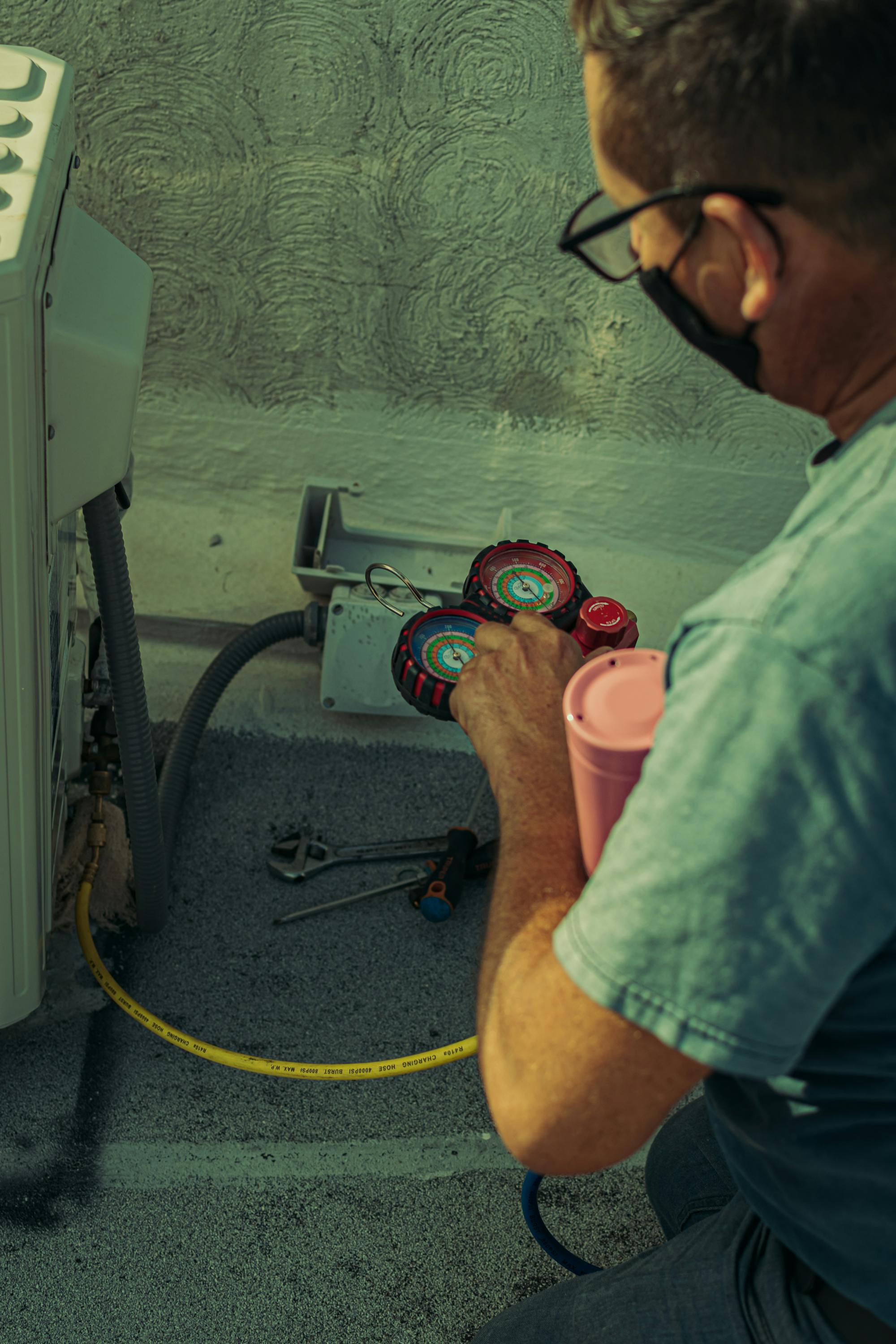
The hardest revenue ceiling in HVAC is the service-call ceiling. A two-truck shop running diagnostics + repairs at $89-$149 service-fee + $75-$150/hr labor caps out somewhere between $300K and $400K annual revenue, no matter how hard the techs work. The math isn't generous: 4-6 service calls per day × $300-$500 average ticket × 240 working days × 2 techs = the revenue ceiling. The shops that break through that ceiling do it the same way every time - they shift the revenue mix from high-volume low-ticket service calls toward high-ticket equipment replacements ($7,500-$15,400 average residential install in 2026, $10K-$45K commercial RTU).
Counterintuitive reality flagged up front: service work has higher gross margin per dollar than install work. Profitability Partners' review of 200+ HVAC P&Ls puts service & repair at 55-65% gross margin and replacement/install at 45-55%. ServiceTitan's industry data is even less generous to installs (35-45% with national average ~40%). The reason installs still win is ticket size, recurring tail, and competitive moat: a $12,000 install with a $15K customer lifetime value (maintenance plan + filter subscriptions + future repairs + referrals + warranty service revenue) beats forty $300 service calls every time, and you can only do so many service calls per day.
But 2026 isn't a year you can fake your way into. Three regulatory shifts hit simultaneously: the R-410A install ban kicked in Jan 1, the federal 25C heat-pump tax credit died Dec 31, 2025 (OBBBA killed it), and IECC 2024 expanded code requirements in 23 states. If you're operating on copy from a 2024 install playbook you'll quote the wrong refrigerant, lean on a tax credit that doesn't exist, and miss code requirements that get the install red-tagged. This guide is for the established service shop (1-3 trucks, $150K-$400K revenue, 70%+ from service work) ready to make the shift in 2026 specifically.
Sources: EPA AIM Act + Section 608 cert, DOE SEER2 standards, ACCA Manual J/S/D, IBISWorld 2026, BLS, HARDI distributor TRENDS, manufacturer dealer programs (Trane TCS, Carrier FAD, Lennox Premier), state rebate programs, HouseCallPro 2026 pricing, Angi 2026 install costs, ServiceTitan + Jobber industry data, Profitability Partners. Items where data isn't publicly disclosed flagged [unverified].
1. The transition math - why service-only shops hit a revenue ceiling
| Service-call diagnostic fee | **$70-$200**, typical $89-$149 ([HouseCallPro 2026 HVAC Pricing Guide](https://www.housecallpro.com/resources/how-to-price-hvac-services/)) |
| Hourly labor rate | **$75-$150/hr**, with $75-$200 minimum service-call fee ([HomeGuide HVAC Repair Cost 2026](https://homeguide.com/costs/hvac-repair-cost)) |
| Emergency / after-hours | **$140-$210/hr typical, $400-$600/hr peak** |
| Average heating-repair ticket (Google Ads channel) | **$3,225 average ticket** at 3.69x closed ROAS ([Searchlight Digital HVAC CPL](https://searchlightdigital.io/what-is-a-good-cost-per-lead-for-hvac-google-ads/)) |
| Full HVAC system replacement (residential 2026) | **$5,000-$22,000**; average **$7,500**. Up to $22K with new ductwork + HEPA ([Angi 2026](https://www.angi.com/articles/insider-s-price-guide-new-heating-and-cooling-system.htm)) |
| Modernize aggregate (56K real homeowner projects) | **$11,590-$14,100 average** ([Modernize HVAC 2026](https://modernize.com/hvac/cost-calculator)) |
| Heat pump install (whole-home ducted, 2026) | **$8,000-$15,000** typical; ducted central up to $25,000 ([Carrier 2026](https://www.carrier.com/residential/en/us/products/heat-pumps/how-much-does-a-heat-pump-cost/)) |
| Mini-split single zone (2026) | $1,200-$5,500, national avg ~$3,000 |
| Mini-split multi-zone 2-5 rooms | $4,000-$14,500 |
| Commercial RTU (small-medium) | $10,000-$45,000 typical; 10-ton unit cost $19,047-$19,716 ex crane/curb |
| **Service & repair gross margin** | **55-65%** ([Profitability Partners review of 200+ HVAC P&Ls](https://profitabilitypartners.io/hvac-profit-margins/)) |
| **Replacement / install gross margin** | **45-55%** (Profitability Partners) or **35-45%** ([ServiceTitan industry data](https://www.servicetitan.com/blog/hvac-profit-margins)) |
| Healthy blended GPM target | **50-55% blended**, **17-20% net** ([Jobber HVAC Profit Margin Guide](https://www.getjobber.com/academy/hvac/hvac-business-profit-margins/)) |
Profitability Partners (private equity buyer review of 200+ HVAC P&Ls): "Service and repair work generates 2x to 3x the margin of new construction installs." Installs win on ticket size + recurring tail + customer lifetime value, NOT on percentage margin. A shop that drops its service-mix to chase installs ends up with lower blended GPM. The right transition is adding installs while keeping service, not replacing one with the other.
Why most shops stay stuck
- Cash flow timing. A 3-ton 16 SEER heat pump on the truck is $2,500-$4,500 in equipment cost float. Permit + inspection delay = 1-3 weeks before final payment. Service calls collect the same day; installs collect 2-4 weeks later.
- Refrigerant cost float. R-454B cylinder went from $345 in 2021 to $2,000+ in peak 2025 (ScoopHVAC). A 25-lb R-410A jug is $300-600 wholesale in 2026 (with $50-80/lb retail markup). Stocking install-grade refrigerant is now a real working-capital problem.
- Skill gap. Service techs diagnose; install techs braze, electrical-rough-in, and pull permits. The two skill sets overlap maybe 50%. Crew transition takes 6-12 months of supervised installs before quality is reliable.
- Sales process gap. A service tech selling a $12K replacement quote in the customer's living room is fundamentally different work than diagnosing a bad capacitor. Average industry close rate is 32% (JustAnswer industry data); trained Comfort Advisors hit 50-65%+ (SellingTrust) - that gap is millions of dollars on a 100-quote year.
What does break through the ceiling
- Add maintenance plans to every install. $175-$350/yr per customer at 70-80% renewal (industry baseline) climbing to 90% YoY for top performers (Oxmaint maintenance contract retention research). 100 plans × $250 average × 0.80 retention compounded = $40K base revenue + $80K-$150K install lead-gen from the same plans surfacing aging equipment.
- Multi-tier proposals (Good / Better / Best). Industry data: offering 4+ options lifts close rate from 42% to 52% (10-pt jump) (ACHR News close-rate research). On 100 install quotes a year, that's 10 extra closed jobs × $10K average = $100K incremental revenue.
- Lead with monthly payment. Same ACHR research: leading with the monthly-financed price puts 42% of new/replacement system sales on financing vs. 21% when you lead with total price. Higher close rate AND higher average ticket (financed customers buy larger systems).
- Manufacturer dealer program (Section 4) for co-op marketing dollars + customer trust signals + extended warranty registration (the moat that compounds over years).
- Service-call-to-install conversion process. Every diagnostic visit on a system >12 years old is an install-lead opportunity. The shops that win the install transition systematize this - every service tech leaves a written equipment-condition report + a quote-request callback flag.
2. The 2026 regulatory reset - three big changes
Three major shifts hit between Dec 31, 2024 and Jan 1, 2026. Marketing copy or sales pitches that miss any of these will quote wrong refrigerants, lean on dead tax credits, or miss new code requirements.
Change #1: R-410A install ban kicked in Jan 1, 2026
- EPA AIM Act required new equipment refrigerants ≤700 GWP by Jan 1, 2025 (EPA Sept 2025 Fact Sheet 40 CFR Part 84).
- R-410A manufacturing/import ban: Jan 1, 2025. Contractors got a one-year grace period to install existing R-410A inventory through Dec 31, 2025. After that, only A2L refrigerants in new installs (LennoxPros R-410A Phaseout, ACHR News on EPA temporary relief).
- A2L replacements: R-454B (GWP ~466) for whole-home systems; R-32 (GWP ~675) dominant for ductless mini-splits. Both are A2L = mildly flammable classification, requiring updated tech training, leak-detection at install, and revised handling procedures (ScoopHVAC R-454B).
- Existing R-410A systems: can be serviced/repaired indefinitely, but only with reclaimed refrigerant once stocks deplete. R-410A pricing through 2026: $4-8/lb wholesale, $50-80/lb installed (Angi 2026 R-410A cost).
- California-specific: effective Jan 1, 2026 - residential and light-commercial AC/HP systems must contain refrigerants with GWP ≤700 (matches federal AIM Act, just adds state enforcement teeth).
Every quote in 2026 is for an A2L system. Customers who got a quote 2-3 years ago referencing R-410A are working with stale information. The leak-detection requirements + slightly higher equipment cost (~5-10% premium for A2L systems in early 2026 due to manufacturer transition) need to be in your quote presentation. Also: the A2L flammability classification is a real customer-education moment - most homeowners hear "flammable" and need calm, factual reassurance. Prepare a one-paragraph A2L explainer for every install quote.
Change #2: Federal 25C heat-pump tax credit ENDED Dec 31, 2025
- The One Big Beautiful Bill Act, signed July 4, 2025, eliminated the $2,000 annual heat pump credit. Heat pump installs in 2026 or later are NOT eligible for the federal 25C credit (UniColorado Federal Tax Credits, AC Direct Federal HVAC Tax Credits 2026).
- Last-chance claim: anything installed and placed in service on or before Dec 31, 2025 is still claimable on 2025 returns filed in 2026 tax season (Rewiring America 25C Guide).
- State rebates still active for 2026 (most-incentivized markets):
State heat-pump rebate programs (2026 active)
| State / Program | 2026 amount | Notes |
|---|---|---|
| Massachusetts Mass Save | Whole-home ASHP $2,650/ton, capped $8,500/account. Partial-home $1,125/ton, same $8,500 cap. +$500 sizing bonus available. | Down from $3,000/ton + $10K cap in 2025. R-410A removed from Mass Save Qualified Product List Jan 1, 2026 - must be R-32 or R-454B. |
| New York NYS Clean Heat 2026 | ASHP rebates $1,000-$8,000+ depending on type/utility/DAC. Range up to $5,000-$12,000 by utility territory. | Starting Jan 1, 2026: residential rebates only for 1-4 unit homes. Flat-rate per-project incentive structure replaces per-Btuh model. |
| NY EmPower+/HEAR (income-qualified) | Up to $24,000 for income-qualified households | Massive driver if your service area has DAC/income-qualified concentration |
| California HEEHRA (single-family) | FULLY RESERVED as of Feb 24, 2026 | Waitlist only - new income-verification requests not accepted. Multifamily applications still being processed (as of early 2026) |
| California HOMES program | Not yet available as of Q1 2026 | CEC received DOE award Jan 2025; implementation pending |
Sources: Mass Save Air Source Heat Pumps, Endless Energy Mass Save 2026, NYS Clean Heat, NYSERDA Heat Pump Program, CEC IRA Residential Rebates.
Change #3: 2024 IECC adoption + ECCCNYS 2025
- 2024 IECC published Aug 14, 2024 by ICC. DOE determination: 7.8% site energy savings, 6.6% energy cost savings vs. 2021 IECC (NAHB 2024 IECC, Ekotrope 2024 IECC Overview).
- First time since 2006 that mechanical system efficiency credit is available in the performance-path compliance.
- New provisions: EV charging readiness, heat pump water heaters, demand-response-ready HVAC.
- Energy recovery ventilation REQUIRED in climate zones 6-8 (most of New England, Upper Midwest, Pacific Northwest mountain regions) (NEEP IECC 2024).
- 2025 NY ECCCNYS: based on 2024 IECC with NY-specific amendments. If you operate in NY, the energy code rewrite changes compliance documentation requirements (KOWBC 2025 NY Energy Code).
Manufacturing channel signal - 2026 distribution data
HARDI (Heating Air Conditioning Refrigeration Distributors International) reports the channel is volatile through the refrigerant transition: Jan 2026 -5.9% MoM, Feb 2026 +4.6% (HARDI Jan 2026, HVAC/P Feb 2026). HARDI scope: 570+ distributor members, 5,000+ branches, 600 suppliers - that's the channel reality. Trailing 12-month is +2.3% - the channel is growing slowly but volatile month-to-month. Plan inventory accordingly.
3. Equipment knowledge that distinguishes install pros
Manual J / S / D - ANSI standards, code-required
ACCA Manual J 8th Edition is the ONLY load-calc procedure recognized by ANSI and is specifically required by residential building codes in most state/local jurisdictions (ACCA Manual J). Manual S (equipment selection) is required by IRC: "Heating and cooling equipment shall be sized in accordance with ACCA Manual S based on building loads calculated in accordance with ACCA Manual J or other approved heating and cooling calculation methodologies" (Calcs-Plus Manual S Code Compliance).
- Manual J 8th Edition (MJ8™): room-by-room load calc. The right approach for the install equipment-selection question ("what tonnage do I install?").
- Manual S: equipment selection from Manual J output.
- Manual D: duct design - completes the J/S/D triad most permit offices require for new residential and multifamily.
- Common shortcut that fails: rule-of-thumb sizing ("500 sqft per ton") oversizes 60-80% of installs, causing poor humidity control, short cycling, comfort callbacks, and warranty-claim spikes (ACCA J/S/D rationale).
- Software that does it: Wrightsoft Right-Suite, Cool Calc Manual J, Elite Software, Cool-Pak. All produce the documentation the permit office and the manufacturer warranty registration both want.
SEER2 ratings (DOE 2023 transition, in full effect 2026)
DOE addresses 3 regions: North, Southwest, Southeast. The minimum standards in 2026:
| **North region AC** | **13.4 SEER2 minimum** (≈ legacy 14 SEER) ([SEER2.com](https://seer2.com/about.html)) |
| **Southeast region AC** | **14.3 SEER2** (<45,000 BTU) · **13.8 SEER2** (≥45,000 BTU) |
| **Southwest region AC** | **14.3 SEER2 + 11.7 EER2** (<45K) · **13.8 SEER2 + 11.2 EER2** (≥45K) |
| **Heat pumps (all regions)** | **14.3 SEER2 minimum + 7.5 HSPF2 minimum** for split systems ([Service Nation](https://servicenation.com/seer2-hvac-efficiency-standards/)) |
Variable-speed / inverter-driven systems (the high-margin sweet spot)
- Incremental price vs. single-stage: $800-$2,500 by brand/capacity/labor (Southeastern Mechanical Services pricing comparison).
- Adoption rate: "currently used in only 5% of residential HVAC systems" because variable-speed motors cost ≥4x single-speed (DOE EERE).
- Energy savings: 20-40% vs. single-stage; lifetime savings $8,000-$12,000 on a single-stage replacement (Carrier comparison guide, Jupitair HVAC guide).
- Why this matters for the upsell: variable-speed is where the margin lives. The Better and Best tiers in your multi-tier proposal (Section 5) are almost always variable-speed. Single-stage is what your competitor quoted; variable-speed is what justifies the premium price + the dealer-program brand on the sticker.
4. Manufacturer dealer programs - the moat that compounds
Joining a manufacturer dealer program (Trane Comfort Specialist, Carrier Factory Authorized Dealer, Lennox Premier) is the single biggest brand-trust signal you can stack onto your install business. The volume thresholds + customer-satisfaction floors are real, but so are the benefits: extended warranty registration, co-op marketing dollars, dealer-locator placement, prompt-pay equipment discounts, free NATE exam credits, branded customer-facing materials. The shops that hit $1M+ install revenue are almost always in 2-3 dealer programs.
Trane Comfort Specialist (TCS)
- Minimum annual purchase: $100,000 of Trane HVAC equipment (TCS Program Brochure - Butcher Distributors).
- Customer satisfaction floor: 90% (TCS Program Brochure).
- Continuing education: ≥8 hours/year for sales, application, service, and install reps.
- Re-qualification: annual; status revoked if CSAT drops or training falls behind (Houston Trane TCS criteria).
- Benefits: extended warranty registration, co-op marketing, dealer-locator placement, branded sales materials.
Carrier Factory Authorized Dealer (FAD)
- Requirements: complete factory training (install/maintenance/repair); maintain local licenses + insurance; consistent CSAT; honor warranty; EPA refrigerant cert (Carrier FAD requirements, AC Systems Inc on FAD requirements).
- Benefits: 100% Satisfaction Guarantee; enhanced dealer locator with NATE badge; access to special financing.
- Specific volume threshold: not publicly disclosed - varies by region/distributor [unverified - quote from your local Carrier distributor].
Lennox Premier Dealer
- Full Premier requirement: ≥10 Google reviews, ≥4-star average. Annual review, suspension on miss (LennoxPros Premier FAQs).
- Benefits: priority Lennox.com listing, Google Business Profile management, ReviewBuzz Pro, enhanced co-op funds, 2 free NATE exams/year, free webinars, prompt-pay cash discounts (LennoxPros Premier Dealer benefits).
York / Bryant / Goodman / Rheem all run similar programs with comparable structures, but specific 2026 initiation fees, volume thresholds, and benefit details vary by distributor and weren't publicly verified for this guide [unverified - quote your local distributor directly]. Mid-Atlantic Bryant Authorized Dealers, for example, can hit similar $50K-$100K annual purchase thresholds with comparable warranty + co-op benefits.
Reading the dealer program math
- $100K annual purchase from one manufacturer = ~30-40 residential install jobs at $2,500-$3,500 average wholesale equipment cost. Most growing shops can hit this in year 1-2 of an install push.
- Co-op marketing dollars: typically 50% match on dealer program-approved campaigns, capped at a percentage of annual purchase. On $100K purchase, $5K-$15K co-op available - used for Google Ads, direct mail, GBP photo + listing services.
- The CSAT floor is real: lose Trane TCS status mid-year if your average review drops below 4.5★. The shops that get ejected from these programs almost never get back in.
5. The proposal-and-financing problem (and the Plyrium fit)
The math from Section 1 is unambiguous: multi-tier proposals lift close rate from 42% to 52%, and leading with monthly payment doubles the financing rate from 21% to 42%. Together, these two changes deliver the largest install-business revenue lift available - bigger than dealer-program enrollment, bigger than route density, bigger than tech training. The shops that win the install transition do this in their first quarter.
Doing it manually in Word + Excel is how shops fail it. Customer-facing proposals need to render cleanly on a phone, accept a digital signature, deposit-bill on accept, and roll through to invoice + payment + warranty registration without rekeying anything. This is exactly what Plyrium ships:
- Multi-tier proposal builder (Good / Better / Best) BUILT IN -
quotes.proposal_tiersJSONB renders a tier-picker on the public quote page (/q/[token]); customer accepts a tier, that tier's items materialize into the locked invoice. Same feature HCP MAX charges $329/mo for; Jobber doesn't have it. Plyrium ships it on every paid tier including Voice ($149). - Optional add-on lines (
line_items.is_optional) - customer ticks add-ons on the public quote page; selection drives which optionals get materialized. Useful for "Add a humidifier? +$650. Add a UV filter? +$425. Add a smart thermostat? +$280." - Hide-line-pricing toggle (
quotes.show_line_pricing) - when false, only the total renders. Useful when you don't want to show your unit equipment cost. - Quote templates - reusable proposal skeletons with frozen line items + optional 3-tier shape. Build a
Furnace Replacement (3-tier)template once, clone for every install. - BYO Financing - set your Wisetack / GreenSky / Synchrony / Service Finance URL pattern with
{amount}substitution; renders "Pay over time - From $179/mo for 60 months" CTA on quotes above min amount. No competitor in this category exposes this - Jobber/HCP/ServiceTitan all want you on their financing partner. - Save card on file - send customer a Stripe-hosted save-card link via SMS or email; collect 30-50% deposit on accept; charge balance off-session at install completion ("Charge ··4242" button). SCA/3DS step-up handled gracefully.
- Customer assets / equipment tracking (
customer_equipmenttable) - install date + brand + model + serial + warranty until + installed-by-us flag. Critical for warranty registration deadlines (Trane: 60 days, Carrier: 90 days). Plyrium can send you a registration-deadline reminder for every installed system, automatically. - Memberships (Care Club) - define your maintenance plan templates with monthly/annual pricing + perks JSON (priority booking, no after-hours fees, included tune-up, 10-15% repair discount). Auto-applies discount on quotes for member customers. Tied to the recurring revenue tail in Section 9.
- Refrigerant tracking -
refrigerant_cylinders(truck stock by serial + ounces) +refrigerant_logs(per-job add/recovery/topup/evacuation events). EPA Section 608 compliance with no spreadsheet workaround. Critical with R-454B / R-32 cylinder cost float of $2K+ each. - Maintenance reminder rules - "annual tune-up due in 14 days" auto-fires SMS + email. Auto-suppressed if the customer has a future appointment booked. The mechanical-retention layer that turns a one-time install into a 7-10 year customer relationship.
- AI voice receptionist - for the spring/fall replacement season when install lead volume spikes. Service-area gating, returning-caller recognition, equipment-history mid-call. Hot-lead alerts wake the owner up immediately for emergency replacement calls.
- Native Google Business Profile management - auto-publishes posts (4-8/mo by tier), AI replies to reviews, sends review requests 2-72h after every completed install with smart-routing (4-5★ → Google review form, 1-3★ → private feedback). Critical for Lennox Premier 4-star floor and Trane CSAT 90% requirement.
Plyrium Bundle is built for the install transition - multi-tier proposals + BYO Financing + memberships + refrigerant tracking on one bill
Voice ($149/mo, AI receptionist + multi-tier proposals + CRM + quotes + invoices + BYO Financing), Visibility ($399/mo, full GBP management + AI review responses + 4 GBP posts/mo + 1 SEO blog/mo), Bundle ($699/mo, everything above + recurring contracts with Stripe autopay + multi-tech scheduling + GPS tracking + memberships + customer equipment tracking + refrigerant tracking + maintenance reminder rules), Front Office ($1,199/mo, Bundle + Voice + 8 GBP posts + 2 SEO blogs + quarterly strategy call + 1-hr SLA). $0 setup, no contract, 14-day trial with no charge for 14 days. The Bundle tier is built for the install-and-maintenance shop specifically.
Compare tiers + start a 14-day trial6. Permits, inspections, warranty registration - the operational gotchas
Mechanical permit costs (verified 2026)
- Residential typical: $75-$300 flat fee; broader range $50-$500 (PermitFlow Mechanical Permit Guide).
- Furnace + AC new install: $250-$1,500; some jurisdictions $82-$1,100 (TheFurnaceOutlet permit cost).
- Pass through to customer in quote - never absorb. Line-item it as "Permit & Inspection" with the actual cost.
California Title 24 / HERS verification
- HERS test triggers: new HVAC installs, replacement HVAC, relocation of HVAC, OR adding/replacing 40+ feet of duct work (CHEERS).
- Required tests: duct leakage, refrigerant charge verification, airflow measurement.
- Duct leakage limits: 15% (no duct replacement); 6% (with duct replacement).
- Forms: CF1R (Certificate of Compliance) before permit; CF2R (Certificate of Installation) by installer (Title24Express).
- HERS rater independence: raters CANNOT be employees of the contractor whose work they're verifying, nor have financial interest. Plan for a third-party HERS rater on every install in CA.
EPA Section 608 certification
- Type I: small appliances <5 lb refrigerant
- Type II: medium-/high-pressure (most residential and light-commercial AC) - the one most install techs need
- Type III: low-pressure (chillers, industrial)
- Universal: I + II + III combined
- Exam: 25 questions per section, 18 correct (70%) to pass
- Required for any tech who handles refrigerant - the install lead and the helper both need it for installs requiring refrigerant work (EPA Section 608 Cert Requirements).
Warranty registration deadlines (the moat that compounds)
Manufacturer warranties tier into Base Limited (typically 5 years) and Registered Limited (typically 10 years). The Registered tier requires submitting the customer's purchase + install date through the manufacturer's portal within a specific window.
- Trane: 60 days post-install for Registered Limited Warranty (10 years). Miss → Base (5 years parts only). Warranty transfer at home sale: 90 days, $99 fee (Trane HVAC Warranty Resources, Trane Warranties Explained).
- Carrier: enhanced warranty REQUIRES product registration within 90 days of install (Martin Enterprises Carrier FAD).
- Industry-general: 60-90 days post-install is the standard window across major brands.
- The Plyrium tie-in: customer equipment tracking captures install_date and brand at the appointment level. Wire a maintenance reminder rule "warranty registration deadline approaching" set to fire at install_date + 45 days. You'll never miss a registration again.
7. Cash flow + deposits + state caps
State deposit caps below are based on state statutes verified at the time of writing. State law changes. Always confirm current limits with a local attorney before drafting your standard install contract. Misclassifying a contract or charging an above-cap deposit creates contract enforceability issues + can constitute an unfair business practice.
| **California** | **Lesser of $1,000 or 10% of contract price.** No exception for special-order material ([California Contractor Down Payment Laws](https://contractorslicensingschools.com/blog/1000-rule-californias-new-down-payment-laws-every-contractor-must-know/), [CSLB Industry Bulletin](https://www.cslb.ca.gov/Resources/IndustryBulletins/2022/Industry_Bulletin_Progress_Payment_Restrictions.pdf)) |
| **Massachusetts (M.G.L. C. 142A)** | **Cannot exceed one-third of total contract price** OR actual cost of special-order/custom material ([Mass.gov Home Improvement](https://www.mass.gov/info-details/massachusetts-law-about-home-improvement)) |
| **New York (GBS § 771)** | **No flat percentage cap.** Progress payments must "bear a reasonable relationship" to work performed/materials/expenses. Contractor must hold progress payments in **escrow account** OR post bond ([NY GBS § 771](https://www.nysenate.gov/legislation/laws/GBS/771)) |
| **Florida** | **No statutory percentage cap** (0-100% legally allowed) |
| **States without specific limits - common practice** | **10-25% of project cost typical** ([Angi contractor deposit guidance](https://www.angi.com/articles/how-much-should-i-pay-general-contractor-prior-starting-job.htm)) |
Recommended install-deposit structure (general)
- Within state caps: 30-50% of total contract due on signing for non-California shops; CA shops capped at 10% / $1K.
- Equipment-on-truck milestone: balance due to 70% on equipment delivery to job site (some shops collect this; others let it slide to install completion).
- Install completion: balance to 100% on completion + customer walkthrough acceptance.
- Permit + inspection: pass-through line item; collected at install completion.
- Maintenance plan enrollment (if not bundled): collected separately as recurring autopay subscription via Plyrium's autopay_stripe collection mode.
Cash flow gap (the hardest part of the transition)
A typical install timeline:
- Day 0: customer signs quote + pays 30% deposit. Equipment ordered from distributor.
- Day 3-7: equipment arrives. Permit pulled.
- Day 7-10: install scheduled.
- Day 10-12: install complete. Balance billed.
- Day 14-21: inspection scheduled.
- Day 21-28: inspection passed (or fail-and-redo). Final paperwork submitted to manufacturer for warranty registration.
- Day 14-30: customer pays final balance (the real lag - many customers wait until inspection passes).
Working capital required: equipment cost (e.g., $3,500 for a 3-ton heat pump) × pipeline depth (3-5 jobs in flight) = $10K-$20K equipment float at any given time. A shop running 8-10 installs/month needs $30K-$50K working capital reserve. This is the single biggest reason shops fail the install transition - they run out of cash flow before the back-half payments arrive.
(a) Distributor net-30 terms - 95% of HVAC distributors offer net-30 to established contractors after 6-12 months of paid-on-delivery history. This shifts ~half the equipment float to the distributor's balance sheet. (b) Customer financing leads instead of deposits - when 42% of your customers are on Wisetack/Synchrony, the financing partner pays you upfront and the customer pays the financing partner over 60 months. (c) Maintenance plan revenue as a stable cash floor - 100 plans × $250/yr avg = $25K predictable annual revenue independent of install pipeline. The Bundle tier's recurring contracts handle this billing automatically.
8. Marketing the transition - lead gen costs + the install funnel
Google Ads HVAC cost per lead (2026 verified)
| **Overall HVAC CPL average** | **$104** ([Searchlight Digital HVAC CPL data](https://searchlightdigital.io/what-is-a-good-cost-per-lead-for-hvac-google-ads/)) |
| **Branded campaign CPL** | **$34** (low - your existing brand searchers) |
| **Non-branded CPL** | **$149** (high - competitive keywords) |
| **PMax (Performance Max)** | **$72** (mid-tier, AI-driven) |
| **"AC installation" / "furnace replacement" CPC** | **$45-$75** in competitive markets |
| **"HVAC repair" CPC** | $22-$40 (lower than install queries) |
| **Unmanaged vs. managed CPL gap** | $280-$350 unmanaged vs. **$65-$90 with active management** |
| **Heating-repair channel ROI** | **3.69x closed ROAS, $3,225 avg ticket** |
| **LSA (Local Services Ads) close rate** | 18-32%; call-only emergency campaigns 30-50% ([WebFX HVAC Marketing Benchmarks 2026](https://www.webfx.com/blog/home-services/hvac-marketing-benchmarks/)) |
Service-call → install lead-gen funnel (the transition path)
- Every diagnostic visit on a system >12 years old is an install-lead opportunity. Capture install_year on every service call (Plyrium customer equipment tracking handles this).
- Equipment-condition report at every service visit. "Compressor labor amps 11% above spec, system age 14 years, R-410A - recommend replacement quote when ready." Customer keeps the report; you flag the customer record for a 90-day-out replacement-quote callback.
- Maintenance plan tune-ups are install-lead generation. Annual visit on a 10-year-old system → "this system has 3-5 years of life remaining; here's what a replacement looks like in current pricing." Quote the replacement quietly; let it marinate for 6-18 months.
- "Flat repair vs replace" decision threshold: industry rule of thumb is repair cost > 50% of replacement cost = recommend replace. Build this into the diagnostic reporting flow.
- Aging system warranty offer: if a system is 8-12 years old and out of original warranty, offer extended labor warranty on the existing system as a hold-tactic - keeps the customer in your service rotation while they save up for replacement.
Heat pump education as marketing wedge
With the federal 25C credit dead, the heat pump pitch in 2026 needs a new framing. The state programs (MA, NY) are still strong. The all-electric trajectory is still real. The pitch points that work in 2026:
- State rebate stacking - Mass Save $8,500 + utility-specific bonuses + sometimes municipal-level rebates. NY $5K-$12K from utility + EmPower+/HEAR up to $24K for income-qualified.
- Energy cost savings - heat pumps deliver 200-400% efficiency vs gas furnaces in moderate climates. Annual operating cost savings $400-$1,500 typical.
- Future-proofing - gas-furnace bans coming in some markets (NY all-electric requirement for new construction by 2026; CA all-electric trajectory).
- One-system-for-both - heat pump replaces both AC + furnace, simplifies the equipment + service scope long-term.
- Backup heat - modern cold-climate heat pumps (Mitsubishi Hyper-Heat, Carrier Greenspeed) operate at -13°F to -22°F. Backup electric resistance OR existing gas furnace as backup-only.
Reviews + GBP for big-ticket trust
- Lennox Premier requires ≥10 Google reviews + ≥4-star average. Trane TCS requires 90% CSAT.
- Homeowners spending $15K read reviews more carefully than ever - average 7.2 reviews per buying decision per industry research.
- Plyrium GBP automation handles this: auto-posts content (Mon+Thu cron, 4-8/mo by tier), AI replies to reviews, sends post-install review requests with smart-routing (4-5★ goes to public Google form, 1-3★ goes to private feedback inbox first so problems get fixed before going public).
- Photo + video on completed installs: 30-60 second walkthrough of the new system - your tech, your truck, the customer's home. Posts to GBP + your Facebook + YouTube. Becomes the trust artifact for the next 5 prospects in that neighborhood.
9. The recurring revenue tail - maintenance plans + 70-90% retention
Every install attaches a maintenance plan. Not optional - bundled into the quote. This is what turns a one-time $12K install into a $25K-$35K customer lifetime value over 7-10 years.
Maintenance plan pricing (2026 verified)
| **Annual plan range** | **$175-$350/year** ([Trane HVAC Maintenance Plans](https://www.trane.com/residential/en/resources/blog/what-is-an-hvac-maintenance-plan/)) |
| **Monthly equivalent** | $15-$30/month typical |
| **Sample tiered programs** | Peak Heating $9.99/$24.99/$39.99 monthly · PV HVAC from $189/yr first system · LCS from $29.99/mo |
| **Industry-standard renewal** | **70-80%+** ([Oxmaint HVAC retention research](https://oxmaint.com/industries/hvac/hvac-service-contract-renewal-retention-tracking)) |
| **Top-performer renewal** | **90% YoY** with dedicated retention process + automated renewal workflow |
| **Below 70% = value problem** | Traditional/poorly-run plans hover at 50% or below |
| **Visible-value plans renew above 85%** | Plans where customer can't see value delivered renew below 60% |
What goes in the maintenance plan
- Annual or biannual tune-up (1 spring AC tune + 1 fall furnace tune for biannual)
- Filter change (or quarterly delivery subscription)
- 10-15% repair discount on out-of-warranty repairs
- Priority booking during peak season (the actual reason most members renew - they don't want to be 4th in line on a 95°F day in July)
- No after-hours fee on emergency calls
- Free diagnostic on covered repairs
- Member-only filter discounts, MERV-13/HEPA upgrades, smart thermostat upgrades
The retention math
100 maintenance plans × $250 average × 0.80 retention compounded over 5 years = ~$1M lifetime maintenance plan revenue from the cohort, ignoring repair revenue, install upgrades, referrals. The recurring tail is what makes the install business compound rather than churn.
Define your maintenance plan templates with monthly/annual pricing + perks JSON (% discount, priority booking, no after-hours fees, included visits, free estimates, extra warranty days). Plyrium auto-applies discount on quotes for member customers. Tie to the Stripe autopay collection mode for set-and-forget billing. Memberships dashboard shows enrolled-customer roll-up, renewal countdown, expiring-soon alerts.
10. The 90-day path - from service-only to first install
90-day path: from service-only to first install
| Days | Focus | Outcome |
|---|---|---|
| Day 1-14 | Crew + cert audit | EPA Section 608 Universal cert for every install lead. NATE cert nice-to-have. Identify your first install lead (the senior service tech most likely to upskill into Comfort Advisor). |
| Day 15-30 | Manufacturer dealer program enrollment | Contact local Trane / Carrier / Lennox distributor. Assess volume thresholds + initiation requirements + timeline. Pick ONE primary brand to start; expand to second after 12 months. |
| Day 31-45 | Sales process + proposal templates | Build your 3-tier proposal templates in Plyrium (or whatever quote tool you use). Standard structure: Good = entry-level single-stage with 10-yr parts/1-yr labor; Better = mid-tier two-stage; Best = variable-speed with 10-yr parts/10-yr labor + maintenance plan included. Wire BYO Financing partner (Wisetack / GreenSky / Synchrony). |
| Day 46-60 | Cash flow + working capital | Confirm distributor net-30 terms. Open dedicated business credit line ($25K-$50K minimum for working capital reserve). Set up Plyrium customer equipment tracking + warranty registration reminder rules. |
| Day 61-75 | First install pipeline | Surface install opportunities from your existing service customer base - every customer with system >12 years old. Quote 5-10 install opportunities at full margin (don't underbid the first ones to "build a portfolio" - the worst mistake new install shops make). |
| Day 76-90 | First completed install + warranty registration + maintenance plan attach | Run the install. Pull permit. Pass inspection. Register warranty within 60-day Trane window or 90-day Carrier window. Enroll customer in maintenance plan. Take photo + video for GBP. Send review request 2-72 hours after install completion. |
Year 1 install business expectations
- Year 1: 12-30 installs at $10K average = $120K-$300K incremental revenue at 45% gross margin = $54K-$135K incremental gross profit
- Year 2: 40-80 installs as systems mature + dealer-program co-op kicks in
- Year 3: 80-150 installs + 100-200 maintenance plans recurring at $25K-$50K base annual revenue
- Year 5+: install business equals or exceeds service business in profit dollars; dealer program(s) compounding; brand recognition driving organic install leads
(1) Underbidding the first 3-5 installs to build a portfolio - leaves $30K-$50K on the table that you'll never recover. Charge full price; if you don't close the first 5, your sales process is broken, not your pricing. (2) Skipping Manual J load calc - oversized system, poor humidity control, comfort callbacks, warranty claims. ANSI-required by code, not optional. (3) Not registering manufacturer warranty - angry customer in year 6 when compressor fails. Wire Plyrium reminder rule for install_date + 45 days. (4) Not pulling permit - red-tagged install that has to be torn out. Permit costs $75-$1,500; tear-out costs $5K-$15K. (5) Insufficient deposit - customer cancels, equipment sitting on truck, distributor net-30 due. Within state caps, 30-50% deposit standard. CA capped at $1K/10%. (6) Not collecting referrals at install completion - install customers refer 1.2-1.8 new customers in the year following install. Build the referral ask into the walkthrough script.
Plyrium Bundle handles the install business operations end-to-end
$699/mo flat (15 seats included), $0 setup, no contract. Bundle bundles multi-tier proposals + BYO Financing + customer equipment tracking + warranty registration reminders + memberships (Care Club) + refrigerant tracking (EPA 608 compliance) + maintenance reminder rules + native GBP management + AI receptionist + AI review responses + multi-tech scheduling + GPS tracking. The math: replacing a $99/mo Jobber AI add-on + a $400/mo SEO agency + a separate proposal tool ($329/mo HCP MAX) + a manual warranty-tracking spreadsheet already exceeds the Bundle price.
Start the 14-day trialCross-references: the HVAC start-from-scratch guide covers the broader business setup. The pricing service work guide covers floor-rate math + pricing strategy. The non-paying-customers guide covers collections law + mechanic's lien deadlines (relevant for unpaid install balances in CA / NY / MA / TX / FL).
Run your hvac business with Plyrium
CRM, scheduling, quotes, invoices, recurring service contracts, and an AI receptionist - built for service-trade contractors. 14-day free trial. No setup fee. No long-term contract.
Start free trialRelated guides
How to Start an HVAC Business from Scratch in 2026
A practical guide from EPA Section 608 to your first paying install - with real 2026 numbers, no fluff. Built for solo operators and small-crew shops.
How to Price Service-Trade Work Without Underbidding (2026 Guide)
The honest pricing playbook for service contractors - your real hourly rate floor (it's higher than you think), the 3 pricing models compared, the 16% who use 3-tier pricing and out-earn the rest, and the math on why charging $25/hr is losing $10/hr.
How to Deal with Non-Paying Customers (Including Lien Rights) - 2026 Guide
Honest collections playbook for service contractors: the FDCPA rules that apply to YOU vs third-party collectors, state-by-state mechanic's lien deadlines (CA 90 days, TX 15th-of-3rd-month, FL 90 days), the demand-letter cadence that actually collects, and when to walk away vs file suit.
HVAC Maintenance Agreements: Pricing, Margins, and What Customers Actually Want in 2026
Done right, a maintenance agreement is the most profitable thing a residential HVAC shop sells. Done wrong, it's $79/year of nothing.